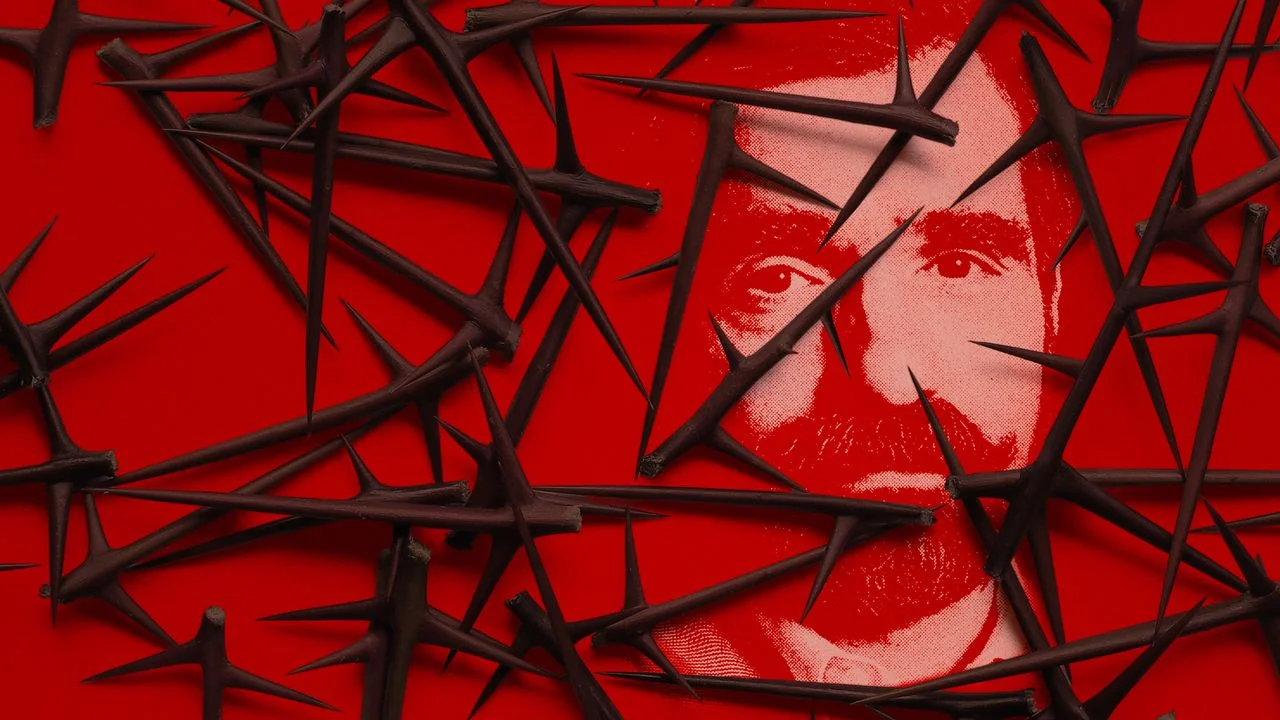
This week's read: When the Religious Right came for Martin Scorsese
This week's Saturday read is Isaac Butler's New Yorker Weekend Essay — a reconstruction of the 1988 religious-right campaign against Scorsese's The Last Temptation of Christ, and an argument that its tactics (boycotts, pre-viewing outrage, victim-frame reversal, controversy-as-fundraising) became the prototype for every American culture war since. ~25–30 min read.

Estimated read time: ~25–30 minutes (~4,800 words)
Why this essay, this week
In 1988, Martin Scorsese finished The Last Temptation of Christ on location in Morocco — 58 days, $7 million, a project that had nearly destroyed his career before a single frame was screened. Before the film opened, Donald Wildmon of the American Family Association was already denouncing it: "Never in almost twelve years of fighting the media's bias against Christian values had I ever come across a more blatant attack on Christianity than this movie." He had not seen it. Neither had the tens of thousands who responded to Wildmon's action packets, mailed to 2.5 million Christians nationwide, urging them to boycott Universal Pictures. 1
Isaac Butler's Weekend Essay for The New Yorker is an account of that campaign — how it worked, who ran it, what it achieved, and what it didn't. 1 But the reason to read it now, in 2026, is Butler's quieter argument: that the tactics perfected against Scorsese in 1988 — consumer boycotts, outrage mobilized around content nobody had consumed, the strategic reframe from aggressor to aggrieved victim — did not stay in the film industry. They became the operating system for American culture wars ever since.
Cargando tarjeta de contenido…
This is an essay that rewards a long Saturday morning. It will change how you watch Scorsese, and probably how you read the news.
About the author
Isaac Butler is the author of The Method: How the Twentieth Century Learned to Act and co-author of The World Only Spins Forward: The Ascent of Angels in America. 1 This essay is drawn from his forthcoming book, The Perfect Moment: God, Sex, Art, and the Birth of America's Culture Wars — a title that situates the Scorsese controversy inside a larger argument about where the current American political moment came from.
Cargando tarjeta de contenido…
What the essay covers
Butler reconstructs the Last Temptation crisis as a production story and a political one simultaneously. On the filmmaking side: how Scorsese and screenwriter Paul Schrader adapted Nikos Kazantzakis's Greek novel — whose depiction of a tormented, human Jesus nearly got Kazantzakis excommunicated from the Orthodox Church — what Schrader means by "monocular storytelling" and why he believes it creates identification rather than offense, and how Universal eventually decided to release the film despite staggering pressure to shelve it. 1
On the political side: how Wildmon and Jerry Falwell built a national mobilization infrastructure around the film, how public relations consultant Josh Baran and his colleague Susan Rothbaum drafted a letter declining to sell the film's rights — a letter that ran as a full-page ad and became a First Amendment touchstone — and how the religious right ultimately profited from the controversy more than the film itself did. 1 (Falwell sold $30 "battle plan kits." Campus Crusade for Christ used the campaign to market its own VHS of Jesus.)
Two years after the protests, Scorsese released GoodFellas. His career survived intact. The tactics did not go away.
The core argument
The 1988 Last Temptation campaign established a repeatable playbook: mobilize anger around content you haven't seen, cast the artist as oppressor and the protester as victim, use the controversy as a fundraising mechanism, and define free expression as an attack on your community. 1 Butler's argument is that this wasn't a one-off fight over one film — it was the prototype.
The essay neither endorses nor attacks the religious conservatives who organized against the film. Butler lets the primary sources do the work. Wildmon's letters, Falwell's press conferences, Rothbaum's reply — the documents themselves show the mechanics. The analysis is in the architecture of the story, not in editorializing.
One line to read it for
"In the United States, no one sect or coalition has the power to set boundaries around each person's freedom to explore religious and philosophical questions whether through speech, books, or films. These freedoms protect all of us. They are precious. They are not for sale. We cannot accept your offer." 1
— Susan Rothbaum, in a letter to the American Family Association, 1988; later published as a full-page advertisement
Read it here
"When the Religious Right Came for Martin Scorsese" — Isaac Butler, The New Yorker, Weekend Essay, published May 30, 2026. Approximately 25–30 minutes.
Cargando tarjeta de contenido…
Cover image: illustration by Ben Kothe / The New Yorker, When the Religious Right Came for Martin Scorsese
Añade más opiniones o contexto en torno a este contenido.