www.newyorker.com
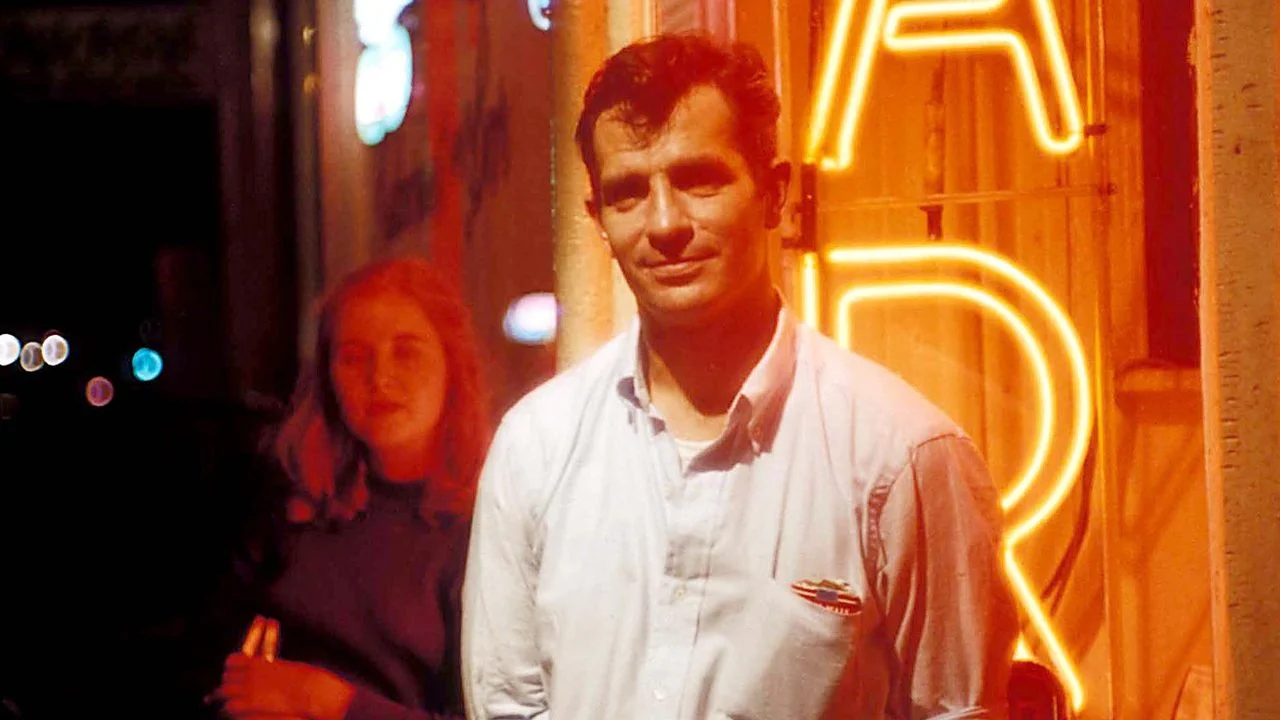
This Week's Read: What Jack Kerouac Left Behind
This week's Saturday read is Joyce Johnson's New Yorker Weekend Essay — an intimate first-person memoir by the last living person close to Kerouac during the weeks surrounding On the Road's publication in 1957. Johnson asks what fame takes from a person rather than what it gives, prompted by the recent Christie's auction of the On the Road scroll for $12 million. ~19 min read.
Estimated read time: ~19 minutes (~4,800 words)
Why this essay, this week
Joyce Johnson is in her nineties. She was 21 when Allen Ginsberg set her up on a blind date with Jack Kerouac at a Howard Johnson's in Greenwich Village, in January 1957 — weeks before Kerouac would become the most famous young writer in America. She was his girlfriend when On the Road came out and the world caved in on him. She is the last living person who knew him in that way, in that moment.
Her essay in this week's New Yorker Weekend Essay series is short by her standards and devastating by anyone's. 1 The occasion is partly the recent Christie's auction of Kerouac's On the Road scroll — bought by country singer Zach Bryan for $12 million, one of the highest sums ever paid for a literary manuscript — and the strange proliferation of relics his fame has generated: cigarette ashes displayed at the Grolier Club, a pair of pajama bottoms, letters sold and resold. 1 But Johnson is not really interested in the auction. She is interested in what the auction reveals: that we are still trying to hold on to someone who never managed to hold on to himself.
リンクプレビューを読み込んでいます…
This is the Saturday morning read this week. It is brief, and it will stay with you.
About the author
Joyce Johnson won the National Book Critics Circle Award for Minor Characters (1983), her memoir of the Beat era, and wrote the definitive Kerouac biography, The Voice Is All: The Lonely Victory of Jack Kerouac (2012). 1 She has spent decades resisting the role history tried to assign her — "girl, blond, circa 1957-58," the woman airbrushed out of a famous photograph when Gap used it in a 1993 ad campaign headlined "Kerouac Wore Khakis." That she keeps writing about him anyway, and keeps finding new things to say, is its own argument about the persistence of certain loves.
リンクプレビューを読み込んでいます…
What the essay covers
Johnson moves between three registers: the personal past (their first meeting, the week he spent at her apartment after returning from Tangier, the night the Times review came out and his life changed permanently), the public present (the auctions, the exhibitions, the scroll), and the philosophical question that bridges them. 1
That question is about what fame takes rather than what it gives. Kerouac had always dreamed of losing his anonymity. By September 1957 he had. Within months he was drinking heavily, retreating to his mother, and sending Johnson postcards that read as if written by a stranger. He died in 1969 in St. Petersburg, Florida, at 47, broke and largely out of fashion. 1
The essay also opens something less discussed: Kerouac's anguish about his Franco-American identity, growing up in a French-speaking enclave of Lowell, Massachusetts, facing what Johnson describes as widespread prejudice against Franco-Americans, keeping his shame and pride tightly to himself. The scroll and the cigarette ashes don't contain any of that.
リンクプレビューを読み込んでいます…
The core argument
Fame did not liberate Kerouac — it replaced him. 1 The anonymity he resented had given him freedom of movement and a self; once it was gone, he was trapped inside the "avatar of the Beat Generation," and the only exit he found was alcohol. What survives him — the relics, the scroll, the millions paid at auction — are, Johnson argues, reminders of his absence rather than stand-ins for his presence. The essay's deeper subject is how love persists even when its tangible forms are dispersed: she sold his letters to drill a new well on her property, and later discovered that he had saved every letter she had ever written him.
One line to read it for
"It may be that, like the crutches and the cigarette ashes, I, too, am part of Kerouac's realia: girl, blond, circa 1957-58. Though I couldn't be saved or collected, he left his imprint on me." 1
— Joyce Johnson
The photograph from Sheridan Square in October 1957, where they were shot for Pageant magazine, has circled the world for sixty-nine years. In the Gap ad, Johnson was not in it. In the essay, she reclaims the frame.
Read it here
"What Jack Kerouac Left Behind" — Joyce Johnson, The New Yorker, Weekend Essay, published May 23, 2026. Approximately 19 minutes.
Cover image: What Jack Kerouac Left Behind, The New Yorker
このコンテンツについて、さらに観点や背景を補足しましょう。