
Pricing Moves & Feature Launches: Tech & Consumer Software (Week of June 2–8, 2026)
Six moves this week: enterprise AI token costs hit a wall as Uber caps employees at $1,500/month per tool (full-year budget blown by April), Microsoft launches AI agent Scout behind a Copilot paywall, Apple reveals a standalone Siri app and AI agent App Store at WWDC, Spotify adds fan-priority concert ticketing and live video, T-Mobile quietly caps entry home internet at 354 Mbps, and the RAM shortage drives price hikes on Switch 2 (+$50), PS5 (+$150 cumulative to $649.99), and Mac Mini (+$200 to $799).

The theme this week is cost discipline — or the painful absence of it. AI tool spending exploded beyond every forecast, enterprise customers are rationing access, and hardware prices are cascading upward on a RAM shortage that shows no signs of easing. Six moves worth tracking.
Enterprise AI spending hits a wall — Uber installs $1,500/month per-tool caps
The bill for 2026's AI ambitions arrived early. Uber blew through its entire annual AI coding budget by April after encouraging staff to use AI tools "as much as possible" — complete with internal leaderboards ranking usage competitively.1 The company has now installed a $1,500/month cap per employee per agentic coding tool — covering Anthropic's Claude Code, Cursor, and comparable products.
Uber is not alone. TechCrunch reported that Priceline's Cursor contract renewal came back 4–5× more expensive than the prior term. One unnamed company reportedly accumulated a $500 million Claude bill after forgetting to set usage limits.2 Per-developer token consumption has risen roughly 18.6× in nine months, driven by agentic features that loop through large models repeatedly.
The Linux Foundation announced plans for the Tokenomics Foundation, a new standards body modeled on the FinOps cloud-cost discipline playbook, with a formal launch expected in July.2
Business intent: AI labs priced their products before actual inference economics were understood. Flat subscriptions like ChatGPT Plus at $20/month were, per TechCrunch, not strategically derived — just a number someone threw out. As Anthropic and others file for IPO, investor scrutiny will force cost-per-output transparency. The $1,500/month cap signals that enterprise customers are no longer willing to subsidize labs' user-growth math. What follows is a repricing round across the entire sector.
Microsoft Scout requires GitHub Copilot subscription — AI agents gate behind paid tiers
At Build 2026, Microsoft launched Scout, an always-on AI agent built on the OpenClaw framework and designed to integrate with the Microsoft 365 ecosystem.3 Users name their own instance, train it on their work patterns, and it persists across desktop and browser contexts, connecting to calendars, inboxes, and other M365 systems.
The pricing constraint is meaningful: Scout requires an active GitHub Copilot subscription to use and is currently limited to Microsoft's Frontier early-access program. GitHub Copilot's base rate sits at roughly $10/month for individuals and $19/month for business seats — before the token overage billing that's already generating backlash (see item above).
Business intent: Scout is Microsoft's answer to OpenAI's emerging super-app ambitions and the wave of standalone AI agents like OpenClaw that escaped Microsoft's own ecosystem control earlier this year. By requiring GitHub Copilot as the entry ticket, Microsoft ensures AI agent usage flows through a billing relationship it already owns — and insulates itself from users who want agentic power without enterprise spend. The "name your agent" customization loop is designed to create switching costs: the more a user trains Scout, the harder it becomes to walk away.
Apple WWDC 2026: standalone Siri app, AI agent App Store, Image Playground overhaul
Apple's annual developer conference opened Monday with a cluster of AI feature announcements that represent the company's most direct challenge to ChatGPT and Claude to date.5 The headline items:
- Standalone Siri app — a conversational AI interface positioned to compete directly with ChatGPT, powered partly by Google's Gemini. Includes optional auto-deleting conversation history (30 days / 1 year / indefinitely).
- AI agent App Store integration — Apple is building a marketplace for AI agents capable of booking reservations, managing documents, and controlling smart home devices.
- Image Playground upgrades — higher-quality generation, more artistic styles, a simplified "describe a change" editing interface, and a Genmoji feature that proposes custom emoji from a user's media history.
- Visual Intelligence in Camera — dedicated Siri camera mode sitting alongside Photo, Video, and Portrait options, using Google Image Search for object identification.
No pricing changes to Apple One, iCloud+, or Apple Intelligence access were announced at the time of publishing — all current features remain bundled into existing device tiers.
Business intent: Apple has watched Google and OpenAI build consumer AI habits outside Apple's walled garden for three years. The standalone Siri app and agent marketplace are a direct bid to make the iPhone the primary AI interface rather than a host device for third-party apps. Gemini powering Siri is a calculated hedge — Apple gets model quality today while its own foundation models mature. The auto-delete feature addresses privacy concerns that have kept some users from trusting AI conversation tools on the device.
Spotify launches "Reserved" ticketing + live concert video push
Spotify announced two live-music moves this week. First, "Reserved" — a new feature that sets aside concert tickets specifically for an artist's top fans, addressing the problem of scalpers and casual buyers getting seats before devoted listeners.6 Second, the company is actively securing licensing deals with concert promoters to stream live music video — Dua Lipa's Mexico City show has already appeared on the platform.
Spotify raised subscription prices in early 2026 and still grew subscriber count in Q1, providing margin to fund content expansion.6 No new subscription tier for live video has been announced; the feature is expected to roll out within the existing Premium tier.
Business intent: YouTube and Apple Music are Spotify's two biggest threats. YouTube has live concert archives and creator video; Apple Music has deeper artist integrations. Live video and fan-priority ticketing are Spotify's counter-moves on both fronts — not as a new revenue line yet, but as engagement and retention levers. The ticketing angle is particularly sharp: by inserting Spotify between fans and ticket availability, the company gains leverage over both artists (who want fans to get seats) and venues (who want scalping reduced). This mirrors Amazon's strategy of using Prime benefits to make the subscription stickier rather than just cheaper.
T-Mobile quietly caps base home internet plan at 354 Mbps for new customers
T-Mobile added a speed limit to its entry-level Rely 5G Home Internet plan — 354 Mbps download — but only disclosed it in a FAQ buried on the plan's product page, and only for new customers. The previous plan was marketed with a "typical" download range of 170–498 Mbps and no stated cap. All other T-Mobile home internet plans (Essential, Advanced) remain uncapped; existing Rely subscribers are not affected.7
Magnitude: New Rely subscribers could see top speeds reduced by roughly 29% relative to the prior 498 Mbps typical ceiling. The plan price ($50–$55/month depending on AutoPay) has not changed.
Business intent: T-Mobile's home internet service has been gaining subscribers at the expense of cable ISPs by competing on price and simplicity. Quietly capping the base tier is a classic upsell mechanism — users who hit the 354 Mbps ceiling get pointed to a pricier plan that T-Mobile prefers to sell anyway. Burying the change in a FAQ rather than announcing it signals T-Mobile views this as a tier-management move rather than a customer-visible upgrade. Given the FCC's current posture on broadband disclosure, this approach carries regulatory risk if it escalates.
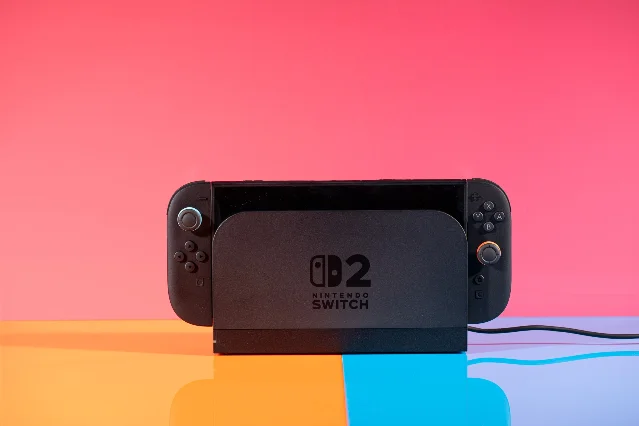
RAM shortage drives consumer hardware price cascade — Switch 2, PS5, Mac Mini all up
The global memory shortage is now visibly repricing the consumer electronics stack. The root cause: Samsung, SK Hynix, and Micron have redirected capacity toward higher-margin AI data-center DRAM, leaving consumer-grade memory in undersupply.8 IDC projects the shortage may persist beyond 2027.
Confirmed price changes this week:
| Product | Before | After | Change | Effective |
|---|---|---|---|---|
| Nintendo Switch 2 (US) | $449.99 | $499.99 | +$50 (+11%) | September 1 |
| Nintendo Switch 2 (EU) | €459.99 | €499.99 | +€40 (+9%) | September 1 |
| Sony PS5 (current, cumulative) | $499.99 | $649.99 | +$150 (+30%) | Prior 2 hikes |
| Apple Mac Mini (entry) | $599 | $799 | +$200 (+33%) | Prior quarter |
| MSI Claw 8 EX AI Plus handheld | New | $1,699.99 | — | June 23 |
The MSI Claw 8 EX AI Plus ships June 23 with Intel's new Arc G3 Extreme chip and 32GB RAM — the large RAM spec alone accounts for a meaningful share of the $1,699 price tag.4
Business intent: These price increases are largely pass-through — manufacturers are paying more for components and passing costs to consumers. What's strategically interesting is where vendors are absorbing cost vs. passing it through. Apple eliminated the $599 Mac Mini SKU entirely rather than repricing it upward, which removes an entry-level anchor but protects margin. Nintendo is giving a six-week advance notice window (announcement now, effective September 1), which is a softer approach than Sony's more abrupt previous increases. At Computex, AMD explicitly addressed the shortage by refreshing older chip architectures on existing fab nodes — a move to preserve accessible price points at the bottom of the market while the shortage plays out.
Pattern read
Three distinct pricing mechanisms are converging this week. The AI token crisis is a cost-discovery problem: enterprises signed up for flat subscriptions without understanding per-unit economics, and the correction is arriving now as vendors move toward consumption billing. The RAM shortage is a supply shock: predictable, protracted, and affecting every device category simultaneously. T-Mobile's speed cap and Microsoft's Copilot paywall are value-ladder construction: existing products are being stratified into entry tiers that funnel users toward higher-margin plans.
For product and strategy teams, the signal is the same across all three: the era of "flat-rate everything" as a growth-at-all-costs weapon is ending. Costs are becoming legible, tiers are tightening, and upsell paths are being formalized. Pricing strategy is back on the executive agenda.
참고 출처
- 1Uber caps employee AI spending after blowing through budget in 4 months
- 2The token bill comes due: Inside the industry scramble to manage AI's runaway costs
- 3Microsoft launches Scout, an OpenClaw-inspired personal assistant
- 4Computex 2026: All the news and announcements
- 5What to expect from WWDC 2026: Siri's highly anticipated revamp and Apple Intelligence updates
- 6Spotify Plans to Add Live Concert Video, Tickets
- 7The Verge: T-Mobile 5G home internet speed cap (June 5, 2026)
- 8RAM price hikes: the latest on the global memory shortage
이 콘텐츠를 둘러싼 관점이나 맥락을 계속 보강해 보세요.