
AI Briefing — Week of June 1, 2026
Anthropic closed a $65B Series H at $965B and filed its S-1 on June 1; OpenAI filed its S-1 on May 22 targeting a $1T Q4 IPO. Claude Opus 4.8 shipped with a 4× improvement in self-reported code honesty; DeepSeek permanently locked in its 75% price cut on V4 Pro. Trump killed his own voluntary AI EO via a last-minute phone call from David Sacks — and Illinois passed the country's toughest AI safety law four days later. Also: Cognition ($1B at $25B), OpenRouter ($113M, 5× usage growth), SoftBank (€75B France data centers), and GitHub Copilot's token billing revolt.

Anthropic closed a $65 billion Series H at a $965 billion valuation, then filed its S-1 three days later. OpenAI filed its own S-1 on May 22. The two most valuable private AI companies in the world are now racing to the public markets on parallel tracks, having absorbed more than $250 billion in private capital between them. Below that layer, over 220 formerly unicorn-valued startups have gone three or more years without a new round, per PitchBook — the same concentration of capital that inflated them is now starving them. 1 The model layer is splitting: DeepSeek made its 75% price cut permanent, Anthropic shipped Opus 4.8 with a focus on honesty over raw throughput, and GitHub Copilot's token billing went live to immediate developer backlash. Separately, Trump killed his own voluntary AI executive order via a single phone call on May 21, and Illinois passed the country's toughest AI safety law four days later.
Products
GitHub Copilot's token billing lands, developers revolt
GitHub Copilot switched from Premium Request Units to AI Credits (1 Credit = $0.01) on June 1. 2 Base subscription prices are unchanged — Pro at $10/month, Business at $19/user — but Chat, Agent mode, and Code Review now consume credits. Code completions and Next Edit Suggestions remain unlimited. The GitHub community discussion post collected nearly 900 downvotes and 400+ comments; individual developers reported monthly costs jumping from $28 to $746 and from ~$50 to ~$3,000 depending on usage patterns.
The structure mirrors what OpenAI and Anthropic already charge for API access, but this is the first time token billing has been applied to a mass-market developer subscription. Enterprise customers get a promotional buffer through August ($30/month extra for Business, $70 for Enterprise). Cursor, Windsurf, and Amazon CodeWhisperer are the alternatives most cited by affected developers.
The signal for founders: Microsoft is apparently done subsidizing heavy agentic usage at the $10/month price point. If your product's architecture generates heavy Copilot usage for your engineering team, the economics just changed.
콘텐츠 카드를 불러오는 중…
Gemini Spark Beta reaches US AI Ultra subscribers
Google Gemini Spark — a 24/7 personal AI agent built on Gemini 3.5 Flash — began rolling out to US Google AI Ultra subscribers during the week of May 26. 3 Spark runs continuously on Google Cloud infrastructure (not on-device), executes tasks in the background while the user is offline, and operates under explicit user direction. It was announced at Google I/O on May 19 and represents Google's first production deployment of an "always-on" personal agent tied to a subscription tier.
Glasswing 30-day update: Mythos Preview finds 10,000+ critical vulnerabilities
Anthropic's Project Glasswing — a restricted-access program in which Claude Mythos Preview audits critical open-source software — hit its 30-day mark on May 26. 4 Mythos Preview has identified more than 10,000 high- or critical-severity vulnerabilities in the software under review. Named findings include a 27-year-old flaw in OpenBSD and a 16-year-old flaw in FFmpeg. The program covers roughly 40 vetted partners; Anthropic has committed up to $100 million in usage credits and a separate $4 million donation to open-source security organizations. Anthropic also pre-announced that Mythos-class models will be available to all customers "in the coming weeks."
Grok Build 0.1 enters public API beta
xAI opened Grok Build 0.1 (
grok-build-0.1) to public API testing on May 29. 5 The model targets agentic coding: web development, debugging, and MCP (Model Context Protocol) tooling. Rated speed: 100+ tokens/second. Pricing: $1/million input tokens, $2/million output tokens. Available through xAI's own API, Cursor, OpenRouter, and Vercel AI Gateway, among others. This is the same model powering the Grok Build CLI.Mistral launches Vibe agent platform and physics AI models
Mistral AI announced Vibe, a unified agent platform, at the AI Now Summit in Paris on May 27. 6 Vibe offers Work and Code modes targeting long-horizon productivity and coding tasks, with a VS Code extension. On the same day, Mistral previewed industrial Physics AI — a model family for predicting physical system behavior in aerospace, automotive, and engineering hardware product development. Mistral also released a production-grade Search Toolkit deployable anywhere. The company simultaneously announced a hardware partnership with VAST Data using NVIDIA GB300 NVL72 systems.
Models
Claude Opus 4.8: honesty as a benchmark axis
Anthropic shipped Claude Opus 4.8 on May 28, 41 days after Opus 4.7 — its fastest major iteration. 7 Benchmark results on Anthropic's internal and third-party evals:
| Benchmark | Opus 4.7 | Opus 4.8 |
|---|---|---|
| SWE-Bench Verified | 83.4% | 88.6% |
| SWE-Bench Pro | — | 69.2% |
| Terminal-Bench 2.1 | — | 81.3% |
| USAMO 2026 (math) | 69.3% | 96.7% |
Pricing is unchanged: $5/$25 per million tokens (input/output) standard, $10/$50 fast mode. Fast mode is now 2.5× faster than Opus 4.7's fast mode and priced at one-third of what that mode cost previously.
The differentiated capability claim is behavioral: Anthropic states Opus 4.8 is "around four times less likely than its predecessor to allow flaws in code it has written to pass unremarked." 7 Simon Willison, testing six frontier models independently, found Opus 4.8 had the lowest error rate — primarily because it declines to answer questions it's uncertain about rather than guessing. Cursor's evaluation team reported that Opus 4.8 "uses fewer steps for the same intelligence" on CursorBench. Databricks reported a 61% reduction in token cost per task in their Genie data agent versus Opus 4.7.
New capabilities: dynamic workflows (research preview) — Claude Code can run hundreds of parallel sub-agents in a single session; effort control — users can set the compute investment level (low / default / high / extra / max); and mid-session system message injection via the Messages API.
콘텐츠 카드를 불러오는 중…
DeepSeek makes V4 Pro's 75% price cut permanent
DeepSeek's V4 Pro promotional discount — in place since early 2026 — was permanently locked in on May 31, the original promotion expiry date. 8 New price: $0.003625–$0.87 per million tokens (down from $0.0145–$3.48). Artificial Analysis ranks V4 Pro first globally on the intelligence-per-dollar frontier. The company says the cut is structural, not promotional: V4 Pro requires roughly one-quarter the per-token compute and one-tenth the memory of its predecessor thanks to architecture efficiency gains.
V4 Pro benchmark context: AA Intelligence Index 52, SWE-Bench Verified 80.6%, LiveCodeBench 93.5%, Codeforces Elo 3,206. Anthropic has separately accused DeepSeek of "distillation attacks" using Claude outputs to train V4 Pro; DeepSeek has not publicly responded.
The competitive dynamic: Anthropic and OpenAI are converging on "judgment quality per token" as their moat. DeepSeek is converging on "intelligence per dollar." These are different optimization targets that favor different application stacks — and that distinction is now priced in at the infrastructure level.
OpenAI publishes Frontier Governance Framework, launches Rosalind Biodefense
OpenAI released its Frontier Governance Framework on May 29, the day after Trump's AI executive order was killed. 9 The document covers cybersecurity risk management, red-team evaluations, incident response procedures, and compliance positioning against California's Frontier AI Transparency Act and the EU AI Act. On the same day, OpenAI launched Rosalind Biodefense, giving vetted developers and US government partners controlled access to GPT-Rosalind, a variant built for biodefense applications.
The framing is explicitly self-regulatory: the framework arrives three days after the voluntary federal EO was cancelled, and structurally mirrors Anthropic's Glasswing program. Both labs are staking out "trustworthy governance" as a competitive differentiator for enterprise procurement — the Futurum Group's Dion Hinchcliffe has noted that large enterprises increasingly favor vendors with documented testing, red-team exercises, and operational security practices.
Funding
Anthropic: $65B Series H at $965B, S-1 filed June 1
Anthropic completed a $65 billion Series H on May 28, setting a post-money valuation of $965 billion — the highest of any private technology company, surpassing OpenAI's $852 billion from its March 2026 Series F. 10 Lead investors: Altimeter Capital, Dragoneer, Greenoaks, and Sequoia Capital. Co-leads: Capital Group, Coatue, D1 Capital Partners, GIC, ICONIQ, XN. The round includes $15 billion of previously committed hyperscaler investment (Amazon $5B), plus new strategic infrastructure partners Samsung, SK hynix, and Micron. Anthropic's revenue run rate reached $47 billion in May, up from $30 billion in February and $10 billion for full-year 2025. 11
Three days later, on June 1, Anthropic filed a confidential draft S-1 registration statement with the SEC. 12 Share count and IPO price have not been determined. The company described the Series H as its last private fundraising round before going public.
콘텐츠 카드를 불러오는 중…
OpenAI: S-1 filed May 22, targeting Q4 2026 at up to $1T
OpenAI confidentially filed its S-1 with the SEC on May 22. 13 Target: a Q4 2026 IPO, possibly September, at $852 billion to $1 trillion. Goldman Sachs and Morgan Stanley are lead underwriters. OpenAI's monthly revenue runs approximately $2 billion, but the company spends $1.22 for every $1 earned — 2026 operating losses are projected at $14 billion. Yahoo Finance analysts estimate a roughly 30% probability that the IPO slips to 2027 as Anthropic's parallel filing compresses the available investor attention window.
Both S-1 filings will force the first comprehensive public disclosure of AI lab financials. For founders: the disclosures will reveal customer concentration, churn, and compute cost structures that have never been public. That's new signal.
Cognition raises $1B at $25B valuation; ARR at $492M
Cognition, developer of the Devin autonomous software engineering agent, closed more than $1 billion in a new round on May 27, at a pre-money valuation of $25 billion ($26B post-money). 14 Lead investors: Lux Capital, General Catalyst, 8VC. Returning investors include Elad Gil, Soma Capital, and Founders Fund; new investors include Ribbit Capital, Atreides, and Layer Global. Enterprise Devin usage has grown 50% month-over-month for six consecutive months. Current ARR run rate: $492 million. Customers include Mercedes-Benz, NASA, Goldman Sachs, and Santander. The company's last round, in September 2025, valued it at $10.2 billion on $400 million raised.
Cognition competes directly with Anthropic Claude Code, OpenAI Codex, and Google Jules.
OpenRouter raises $113M Series B; 6-month usage up 5×
OpenRouter, a model gateway providing access to 400+ AI models from a single API, closed a $113 million Series B led by CapitalG (Alphabet's growth fund) on May 26. 15 Post-money valuation: approximately $1.3 billion per NYT. The platform has 8 million users and processed 100 trillion tokens in the past month. In the six months prior to closing, weekly token throughput grew from 5 trillion to 25 trillion — a 5× increase. CapitalG's investment signals Alphabet is comfortable funding infrastructure that routes traffic to its direct competitors (Anthropic, OpenAI, xAI, DeepSeek).
The growth rate is the key number. It prices in the "model-agnostic" thesis: developers aren't consolidating on a single provider.
SoftBank commits €75B for 5 GW of AI data centers in France
SoftBank Group announced up to €75 billion ($87B) in AI data center investment in France on May 30–31. 16 Phase 1 is a confirmed €45 billion commitment for 3.1 GW in the Hauts-de-France region (Dunkirk, Bosquel, Bouchain), targeting completion by 2031. Schneider Electric will co-build power infrastructure at the Dunkirk port site; EDF will partner on the Bouchain facility. SoftBank will finance the build through project financing with hyperscalers as anchor tenants. Masayoshi Son at the press event: "There's no choice. U.S. is going fast, China is going fast, Europe, Japan, Asia have to also go fast, not to be left out." 17 SoftBank's stock rose 14% on the announcement day; the company is up more than 70% year-to-date.
Decart raises $300M at $4B; NVIDIA backs a startup that optimizes competitor chips
Israeli AI startup Decart closed $300 million at approximately $4 billion on May 31. 18 Radical Ventures led; NVIDIA, Sequoia, Benchmark, Toyota Ventures, Adobe Ventures, eBay Ventures, and Amazon participated. Amazon is the company's first signed customer. Decart builds real-time video world models (its Oasis product hit 1 million users within 3 days of launch) and a GPU optimization layer that runs on NVIDIA hardware and competing chips — Amazon Trainium and Google TPU included. NVIDIA investing in a company that optimizes for competing chips is consistent with its broader VC posture: the company participated in 67 venture deals in 2025, and its private equity portfolio grew from $1.8 billion to $3.8 billion over that year.
XCENA raises $135M at $570M on memory-as-bottleneck thesis; Groq reportedly raising $650M
XCENA, a Korean-American memory chip startup, closed a $135 million Series B on May 29 at a $570 million valuation. 19 Seoul VCs Atinum and IMM Investment co-led. XCENA's MX1 chip uses the CXL (Compute Express Link) protocol to bring compute closer to DRAM, with the company claiming it can consolidate workloads that would otherwise require 10 servers onto a single server. The founding team — CEO Jin Kim, CTO Dohun Kim, and CPO Harry Juhyun Kim — all came from Samsung and SK hynix. Mass production at Samsung's foundry is targeted for late 2026, with revenue starting in 2027. Kim's framing: "CPUs and GPUs have both gotten smarter over the decades. Memory never did." 19
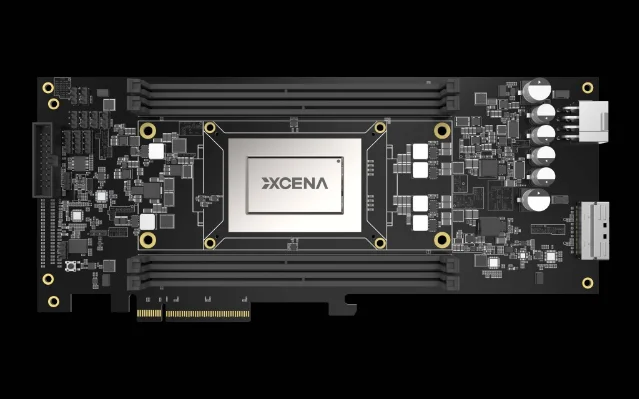
Separately, AI inference chip company Groq is reportedly raising $650 million from existing investors including Disruptive and Infinitium, who have agreed to backstop the round. 20 The company is pivoting from chip hardware toward an AI inference cloud (neocloud) model. In December 2025, NVIDIA licensed Groq's hardware technology while absorbing most of its senior engineering staff in a deal structured to avoid formal acquisition — reported at approximately $20 billion in value; Groq's current CEO and CFO are both interims. This round has not formally closed.
Regulation
Trump kills AI executive order at the last minute; White House splits publicly
On May 21, the White House invited executives from OpenAI, Google, Anthropic, Meta, and Microsoft to the Oval Office and announced a signing ceremony for the following day. Three hours before it was scheduled, the administration cancelled. 21 Trump told reporters he "didn't like certain aspects of it" and didn't "want to do anything that's going to get in the way" of America's lead over China.
The proximate cause: former White House AI and crypto policy adviser David Sacks — who left the formal role earlier in 2026 but retained direct access — called Trump that morning, according to a White House official who described the call as happening "unbeknownst to anybody." 21 Sacks warned that a "voluntary" review system could calcify into a de facto mandatory licensing regime, handing China an advantage.
The cancelled order — titled "Promoting Advanced Artificial Intelligence Innovation and Security" — would have directed CISA to issue binding directives hardening federal civilian networks, established a Treasury-led AI Cybersecurity Information Sharing Hub, and tasked NSA with leading classification benchmark testing for frontier models. Its Section 3(c) explicitly prohibited converting the voluntary process into mandatory licensing.
Lawfare's Kevin Frazier and Alan Z. Rozenshtein put it plainly: "Voluntary, in other words, isn't the floor of frontier AI policy in this administration; it's the ceiling." 21 The White House is split: Treasury Secretary Scott Bessent's faction takes frontier model risks seriously; Sacks's faction prioritizes innovation speed. Notably, Steve Bannon and 60+ MAGA-aligned figures wrote to Trump the same week demanding mandatory testing of advanced models — the ideological fault line does not run cleanly between parties.
Illinois passes America's strongest AI safety law
Illinois SB 315 (Artificial Intelligence Safety Measures Act) cleared the state House on May 27, four days after the federal EO was killed. 22 Governor JB Pritzker has stated publicly he will sign it.
Requirements for frontier AI developers:
- Establish and maintain an AI safety framework governing identified risks
- Publish a transparency report before any covered model deployment
- Commission an independent third-party safety audit annually
- Report material safety incidents
- Establish internal whistleblower reporting procedures and protections for covered employees
Penalties: up to $3 million per violation. Effective date: 2028. Anticipated auditors: Deloitte, EY, KPMG, PwC, plus AI Evaluator Forum members (METR, Transluce, Averi). 22
Both OpenAI and Anthropic publicly endorsed the bill. OpenAI's global affairs lead Chris Lehane: "The Illinois General Assembly has shown real bipartisan leadership in advancing SB 315 and developing a thoughtful framework for frontier AI safety." 23 Chamber of Progress — whose partners include Google, Apple, Amazon, and a16z — opposed it.
Scott Wisor, policy director at the Secure AI Project, framed the underlying problem concisely: "We're in a situation where the AI companies grade their own homework." 22
State patchwork accelerates; EU enforcement clock at 62 days
Connecticut Governor Lamont signed SB 5 on May 27, requiring employers to disclose automated employment decision technology to workers and applicants. 24 (Background: Colorado SB 26-189, signed May 14, had already narrowed that state's original comprehensive AI Act to cover only automated decision-making in "significant decisions" — risk management and impact assessment obligations removed — effective January 2027. 25)
K&L Gates analysts noted that federal preemption under EO 14365 (signed December 2025 to block state AI laws) remains the stated goal but is operationally stalled — the Commerce Department's state law assessment, the FTC's AI policy statement, and the FCC's disclosure standards are all incomplete. 26 Compliance obligations are accumulating via four channels regardless: FTC enforcement, civil rights enforcement, NIST standards (voluntary but increasingly used as procurement baselines), and state law. OpenAI described Illinois, New York, and California as forming "a de facto national framework" as states converge on common requirements.
On the global side: the EU AI Act's enforcement provisions for high-risk AI systems and general-purpose AI models take effect August 2 — 62 days from today. 27 At that point, the AI Office gains power to demand technical documentation (Article 91), commission independent model evaluations including API access (Article 92), and require mitigation measures up to and including market withdrawal (Article 93). Maximum fines: 3% of global annual turnover (Article 101). The European Parliament's vote on the Digital Omnibus — which includes the AI regulatory sandbox extension — is expected June 14–17. China released its first comprehensive AI ethics guidelines on May 19 and a joint SAMR/NDRC AI evaluation framework on May 30, both aimed at establishing standardized, measurable AI trustworthiness criteria. 28 29
The week's regulatory arc in one sentence: the federal government lost its last voluntary guardrail at the same moment states stopped waiting for it.
Cover image: Claude Opus 4.8 launch visual from Anthropic
참고 출처
- 1CNBC: AI is crushing startup valuations for pre-ChatGPT firms
- 2TechCrunch: 'What a joke': Github Copilot's new token-based billing spurs consternation among devs
- 3Google DeepMind: Gemini 3.5: frontier intelligence with action
- 4SNEOS: Best of the Week in AI: May 24–31, 2026
- 5xAI: Grok Build 0.1 on API
- 6Mistral AI News
- 7Anthropic: Introducing Claude Opus 4.8
- 8Engadget: DeepSeek permanently reduces the price of its flagship V4 model by 75 percent
- 9CIO Dive: OpenAI unveils security framework, citing emerging regulations
- 10Anthropic: Anthropic raises $65B in Series H funding at $965B post-money valuation
- 11TechCrunch: Anthropic raises $65 billion, nears $1T valuation ahead of IPO
- 12Anthropic: Anthropic confidentially submits draft S-1 to the SEC
- 13Forbes: How AI Mega-Startups Rewired Venture Capital And The Midas List
- 14TechCrunch: AI coding startup Cognition raises $1B at $25B pre-money valuation
- 15TechCrunch: OpenRouter more than doubles valuation to $1.3B in a year
- 16SoftBank Group: SoftBank Group to Build 5 GW of AI Data Center Capacity in France
- 17CNBC: SoftBank plans 75 billion euros of AI investments in France
- 18ActuIA: Why Nvidia is Betting on Decart, an AI Startup Capable of Optimizing Competitor Chips
- 19TechCrunch: This chip startup just raised $135M on a bet that AI's biggest bottleneck isn't compute — it's memory
- 20TechCrunch: After Nvidia's $20B not-acqui-hire, AI chip startup Groq reportedly raising $650M
- 21Lawfare: AI Governance by Phone Call
- 22WIRED: Illinois Lawmakers Just Passed America's Strongest AI Safety Bill
- 23PYMNTS: Illinois Governor Vows to Sign AI Safety Bill
- 24Troutman Pepper Locke: Analyzing Connecticut's New Employment AI Law
- 25Crowell & Moring: Colorado Hits Reset on AI Regulation
- 26K&L Gates: How AI Governance Is Being Built in Real Time
- 27The EU AI Act Newsletter #103: The August Countdown
- 28IAPP: China issues new AI ethics guidelines
- 29SCMP: China launches AI framework to improve 'black box' transparency
이 콘텐츠를 둘러싼 관점이나 맥락을 계속 보강해 보세요.