AI Leaders Weekly: May 25–June 1, 2026
The week's defining story: Sam Altman and Dario Amodei both walked back their "AI jobs apocalypse" predictions within the same 7-day window, as OpenAI and Anthropic approach blockbuster IPOs at a combined near-$2 trillion in reported valuation. Jensen Huang unveiled the N1X — NVIDIA's first Windows ARM PC chip — while anchoring $100B in annual Taiwan spend. Demis Hassabis framed the current agentic era as a "practice run" for AGI and closed a $2.1B Series B for Isomorphic Labs. Arthur Mensch defied the Pope on military AI, announced custom chip exploration, and signed Airbus.

The defining story of this week is not a product launch. Sam Altman and Dario Amodei — the two executives who spent the better part of 2024–2025 warning that AI would hollow out white-collar employment — both walked back those predictions within the same 7-day window, as both companies approach record-valuation IPOs. Altman called himself "delighted to be wrong." Amodei reframed automation as a productivity multiplier. Both did it while their companies sit at or near a combined $2 trillion in reported valuation. Coincidence is possible; coordination is not provable. What is provable: the narrative shifted, the timing was synchronized, and the financial incentives point in one direction.
Meanwhile, Jensen Huang moved on three fronts simultaneously — a new PC chip, a $100B Taiwan commitment, and a Seoul Physical AI agenda. Demis Hassabis gave three interviews without tweeting once and closed a $2.1B biotech round. Arthur Mensch defied the Pope, announced custom chip exploration, and signed Airbus.
| Leader | Signal level | Key events |
|---|---|---|
| Sam Altman | High | Jobs reversal (CBA, May 26), OpenAI Foundation $250M, Rosalind Biodefense, OpenAI Robotics launch |
| Dario Amodei | High | Jobs reversal / Jevons Paradox framing, Claude Opus 4.8 release, Anthropic $65B Series H |
| Demis Hassabis | High | AGI "practice run" framing (Axios), Isomorphic $2.1B Series B, three interviews, zero original tweets |
| Jensen Huang | High | GTC Taipei / N1X chip launch, Taiwan $100B annual spend, CNA layoffs rebuke, CMU commencement |
| Arthur Mensch | High | Custom chip exploration, Vibe platform, €4B infra plan, military AI defense vs. Pope |
| Mustafa Suleyman | Medium | Zero-distillation strategy (Semafor), Copilot super app, Build conference model reveal teased |
| Yann LeCun | Low | Unsupervised Learning podcast: LLMs not the path to human-level AI |
| Ilya Sutskever | Minimal | NAS Award; SSI no new announcements |
Sam Altman: walking back the apocalypse, then doubling down on ambition
The jobs reversal
On May 26, speaking via video link at Commonwealth Bank of Australia's CEO conference in Sydney, Altman told CBA CEO Matt Comyn that he no longer believes AI will produce the white-collar job destruction he once predicted. 1
"I'm delighted to be wrong about this. I thought there would have been more impact on entry-level white-collar jobs being eliminated by now than has actually happened." 1
The explanation he offered was personal rather than macroeconomic: he tried letting AI reply to his Slack messages and emails, then went back to doing it himself. The experience, he said, showed him how irreplaceable the human-to-human dimension of work actually is — "the human part" of a job. He was explicit that his earlier predictions were in the right direction on technology but "pretty wrong" on socioeconomic impact. 1
Peter Wildeford, policy director at AI Policy Network, told TIME he is skeptical: "The AI industry is trying to change the narrative, and it's hard to know if they actually updated their predictions or just want to change public opinion." 2 Altman's reversal came as Reuters reported that OpenAI has confidentially filed IPO paperwork targeting a $1 trillion valuation and at least $60 billion in new financing. 3
The day after, on May 27, Altman announced on X that the OpenAI Foundation is making an initial $250 million commitment across three areas: independent measurement of AI's economic impact; support for workers and communities in transition; and new mechanisms for broadly shared economic benefits — including concepts like shifting taxation from labor to capital, sovereign wealth fund models (he cited Norway and Alaska), and multi-stakeholder economic simulation. 4 The blog post behind the announcement was authored by Divya Siddarth and Wojciech Zaremba (OpenAI co-founder), not by Altman directly.
Sam Altman at the BlackRock Infrastructure Summit, Washington, March 2026 (Getty Images).
Biodefense and robotics in the same afternoon
On May 31, Altman posted two major announcements within 62 minutes of each other.
At 15:05 UTC, he shared OpenAI's Rosalind Biodefense initiative: a program giving vetted developers access to GPT-Rosalind, a model designed for biosecurity applications. 5 First-wave partners include Fourth Eon Biosecurity (DNA synthesis screening), Lawrence Livermore National Laboratory (medical countermeasures), Johns Hopkins Applied Physics Laboratory (protein engineering), and CEPI (vaccine development, including the current Ebola outbreak). 6 Altman's framing was brief: "We want to help the world get a head start on biodefense." The official blog's framing was pointed: frontier AI should "meaningfully favor defenders" over adversaries.
At 16:07 UTC, Altman announced OpenAI Robotics. 7 The division is led by Aditya Ramesh and evolved from what Altman described as "a world simulation research program" running for the past year. His stated near-term focus: robots that assist skilled workers building physical infrastructure. Long-term: "everyone having a personal robot doing anything they need." The post drew 1.5 million views and is actively recruiting across hardware, systems, and ML engineering.
"AI should be able to help people in the physical world. In the short term, we are focused on robots to support skilled workers to build our future infrastructure; in the long term, we imagine everyone having a personal robot doing anything they need." 7
The pairing of biodefense and robotics in the same afternoon is worth noting: both are areas where physical-world AI creates new regulatory and liability territory that OpenAI has not previously occupied.
Dario Amodei: Jevons Paradox, a new model, and a $965B valuation
The pivot to Jevons
Amodei's jobs reversal has been building since early May, but the version that crystallized this week was his Jevons Paradox framing — the economics principle that efficiency improvements often increase total demand rather than reduce it. 3 In his telling:
"If you automate 90% of the job, then everyone does the 10% of the job… the 10% kind of expands to be 100% of what people do and kind of 10-times their productivity." 3
This is a meaningful shift from Amodei's 2025 position, in which he characterized AI as a potential "general labor substitute" capable of eliminating 50% of white-collar roles. He has not retracted that concern entirely — and the timing of the shift, with Anthropic completing its $65B Series H at a $965B post-money valuation on May 28, is conspicuous. 3 Yale Budget Lab research found no significant displacement effects in high-AI-exposure occupations since ChatGPT's launch — data consistent with the Jevons frame but also with simply not enough time having passed yet.
Claude Opus 4.8 and the honesty benchmark
On May 28, Anthropic released Claude Opus 4.8, which outperforms GPT-5.5 on multiple benchmarks. 8 The most operationally relevant addition is dynamic workflows (research preview): support for hundreds of parallel sub-agents capable of executing large-scale code migrations across hundreds of thousands of lines. The release also reports roughly a fourfold improvement in honesty — the model more frequently flags uncertainty and reduces unsupported assertions, a metric Anthropic's alignment team describes as reaching "new highs on measures of prosocial traits." 8
Mythos — Anthropic's most restricted model tier, accessible so far only to select partners including Apple and JPMorgan — is expected to open more broadly within weeks. 8
Demis Hassabis: three interviews, one theory, and $2.1 billion for drug discovery
The "practice run" thesis
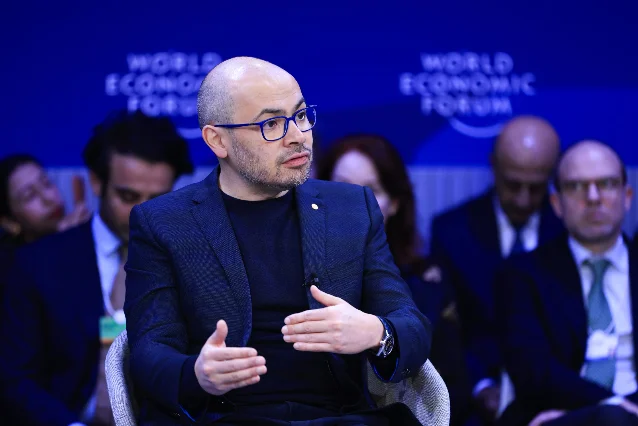
In a May 26 interview with Axios's Ina Fried, Hassabis articulated what he sees as the strategic purpose of the current agentic AI moment: it is a rehearsal. 10
"You can imagine the agentic era in this next year is a little bit like a practice run." 10
His logic: agents are giving society and government a chance to stress-test how they will respond to systems that are meaningfully more capable. AGI itself he now places at 2030, with 2029 in reach. He acknowledged that Anthropic's Mythos — which alarmed enterprises and governments when its cyber capabilities became known — was "a good warning shot across the bow." 10
He is not satisfied with how non-AI experts are engaging with the implications. "My economist friends, I feel, are still not taking this seriously enough." 10 On the self-improvement question — whether AI systems are yet compounding their own capabilities autonomously — his answer was precise: "What we're seeing is soft self-improvement, in the sense of these coding agents are making engineers much more productive." 10 Full recursive self-improvement, he said, is not yet happening.
In a separate May 27 video interview with The Rundown AI's Rowan Cheung, Hassabis described the remaining technical gaps before AGI: robust physical world modeling, persistent memory, and continual learning. 11 He said that in the post-AGI era, "taste, original thinking, and emotional connection" will grow more valuable for humans — not less.
Isomorphic Labs closes $2.1B Series B
On May 27, Isomorphic Labs — the AI drug discovery company Hassabis spun out of Google DeepMind in 2021 — closed a $2.1 billion Series B led by Thrive Capital. 9 Hassabis described the purpose as "turbocharging" the next phase: expanding compute, generating proprietary data, and building out the pipeline. The company already has partnerships with Johnson & Johnson and Novartis; its projects are in preclinical stages, with no clinical trial timeline disclosed.
His stated ambition is not a single drug or disease class:
"It's actually about building the platform to solve the overall problem, solving all disease, right." 9
He articulated the company's founding thesis: biology can be thought of as information, cells as information structures, and AI as the natural language for describing biological systems. Automated labs are planned but not yet built — "we want to get the timing right." 9
Gemini 3.5 Pro status: Announced at Google I/O on May 19 for a June launch, it was not live as of June 1. Sundar Pichai confirmed it remains in internal testing; no pricing, API ID, or benchmark data has been released. 12 Hassabis posted zero original tweets this week; his activity on X consisted entirely of retweeting Google DeepMind announcements.
Jensen Huang: a new PC chip, a $100B Taiwan anchor, and a very public rebuke
N1X: NVIDIA enters the Windows laptop market
At GTC Taipei 2026 on June 1, Huang unveiled the N1X — NVIDIA's first consumer PC processor since Tegra X1, designed for Windows ARM laptops. 13 The chip pairs a 20-core ARM CPU (10+10 design, MediaTek-designed silicon, TSMC 3nm process) with a 6,144-CUDA-core GPU equivalent to a desktop RTX 5070, with two dies connected via NVLink at 300 GB/s. It carries the full CUDA software stack — the same programming environment used in NVIDIA's data centers, running in a laptop for the first time.
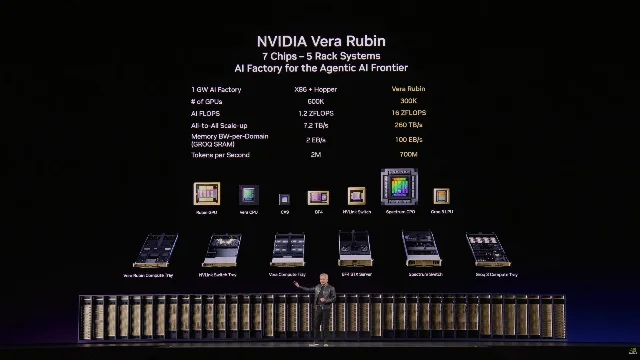
First-wave OEM partners: Dell, Lenovo, Asus, and MSI. Pricing targets the premium segment — TSMC 3nm plus LPDDR5X memory keeps costs high. Target availability: holiday 2026, broad rollout in early 2027. 14
The structural significance: Qualcomm had held an exclusive license for Windows on ARM. The N1X ends that exclusivity. Microsoft and ARM both participated in the coordinated tease campaign preceding the launch — three companies simultaneously posting a GPS coordinate puzzle to confirm the Taipei venue — which signals a platform-level push, not just a product announcement. 15
Taiwan as AI epicenter
On May 27, Huang addressed roughly 1,000 NVIDIA employees at the construction site of Constellation — the company's new Taiwan headquarters in Beitou Shilin Science Park, Taipei, under a 50-year lease from the city government. 16 He disclosed that NVIDIA's annual spend in Taiwan has grown from $10–15 billion a few years ago to $100 billion now, and is on a path toward $150 billion.
"Taiwan is the epicenter of the AI revolution. This is where the chips come, packaging comes, this is where the systems are made, this is where AI supercomputers were created." 14
The Taiwan partner network has grown from 10 companies to 150 over the same period — reflecting the full Vera Rubin AI platform supply chain, which requires TSMC's CoWoS advanced packaging to integrate GPU and CPU dies with high-bandwidth memory into functional AI accelerators. The Constellation campus is designed to house 4,000 NVIDIA employees directly and generate 10,000+ total jobs; full operations are targeted for 2030.
"Just too lazy" — Huang rebukes CEOs on AI layoff excuses
On May 25, speaking to Channel NewsAsia (CNA), Huang directly challenged the narrative that AI is already causing significant job losses. 17 His argument was chronological: generative AI tools only became genuinely productive roughly six months ago; many of the layoffs executives blame on AI occurred two years before that. Therefore, he said, the attribution is implausible.
"I think the narrative that connects AI to job loss for many of the CEOs that are doing it, it is just too lazy." 17
"AI has just arrived. How is it possible they're already losing jobs?" 17
He called the behavior "irresponsible" — "I think we're scaring people and that's irresponsible" — and called for a more balanced narrative: one that takes safety seriously but also tells "an optimistic story that makes people want to be part of it."
The same CNA interview surfaced an anecdote about Trump's China visit: Huang said the president called him personally and "insisted" he board Air Force One from the West Coast to Alaska, and Huang scrambled to make the flight. He said NVIDIA was "there to really represent the United States and support the president." 17
At Carnegie Mellon University's 2026 commencement — held earlier this month — Huang framed the same point differently for a student audience:
"AI doesn't replace people — people replace people using AI." 18
Multiple social media reports noted the line was received with unease by some attendees.
Seoul next: Physical AI summit, June 5
After GTC Taipei (June 1–4), Huang flies to Seoul to meet with the leaders of SK Group (Chey Tae-won), LG Group (Koo Kwang-mo), Hyundai Motor Group (Chung Eui-sun, tentative), and Naver (Lee Hae-jin). 19 This is a follow-up to the October 2025 "Kkanbu Summit" — the informal dinner at Kkanbu Chicken restaurant in Gangnam with Samsung's Lee Jae-yong, Chey Tae-won, and Huang. Samsung's Lee is absent this time due to overseas commitments.
The Korea Herald describes the agenda as having moved "upstream along the value chain" from memory chips to the machines powered by them. LG's meeting is the group CEO's first with Huang personally; it builds on a conversation between LG Electronics' CEO and Madison Huang (NVIDIA VP and Huang's daughter) about pairing LG's CLOiD home robots with NVIDIA's Isaac robotics software platform. Hyundai is positioning Boston Dynamics's Atlas humanoid robot as a core future business.
Arthur Mensch: Mistral rebukes the Pope, eyes custom chips, and signs Airbus
Mistral's Arthur Mensch had an unusually active week for a CEO running a company that rarely makes headlines outside France.
On May 28, speaking to CNBC, Mensch confirmed Mistral is exploring designing its own chips. 20 "Of course it is interesting… Owning the chips may come, I think it should come at some point." He named NVIDIA as the current primary partner. The same announcement bundle included Mistral's Vibe enterprise agent platform (drafts, codes, and deploys autonomously), a new 10MW inference data center in Les Ulis, France, and a total infrastructure investment plan of €4 billion — targeting 200MW by end of 2027 and 1GW by 2030. Airbus signed as a new customer across commercial aviation, defense, and space. 21 The company targets €1 billion in revenue for 2026, up from €200 million in 2025.
On military AI, Mensch went further than any major Western AI CEO this week: he directly challenged Pope Leo XIV's May 25 encyclical Magnifica humanitas, which called for prohibitions on AI use in warfare.
"As long as we have adversaries that are threatening, and they are threatening, we do need to have our own capabilities." 21
Mensch confirmed Mistral already supplies AI technology to the French military. On European AI infrastructure broadly:
"Europe is lagging behind when it comes to the buildout of infrastructure, and so we are investing to close that gap." 20
Mustafa Suleyman: zero-distillation and the Copilot super app
In a May 29 Semafor interview with technology editor Reed Albergotti, Suleyman (CEO of Microsoft AI) articulated a specific position on model training methodology: Microsoft's internally developed models use no distillation from OpenAI or Anthropic outputs. 22
"You've basically stuffed your model full of somebody else's knowledge." 22
His argument: frontier labs don't publish their training data priorities. Models trained on distilled outputs inherit unknown emphases and blind spots. For general-purpose tasks — as opposed to narrow benchmarks — this eventually causes capability gaps. He suggested this may explain why low-cost open-source Chinese models have not displaced proprietary models in enterprise general-purpose use as widely as predicted.
The same day, Fortune reported exclusively that Microsoft is building a Copilot super app integrating GitHub Copilot, Copilot Chat, Copilot Cowork, and an internal "Autopilot" agentic workflow layer under a single surface. 23 The project is led by Jacob Andreou (formerly Snap's product and growth lead) with a target release of late summer 2026. The business context: of Microsoft 365's 450 million users, fewer than 4.5% are paying Copilot subscribers. GitHub Copilot has more than 4.7 million paid users but faces direct competition from Cursor and Claude Code.
Suleyman is expected to announce Microsoft's internally trained model at the Build conference, which begins June 9.
Other signals
Yann LeCun (Meta AI chief scientist and AMI Labs founder) gave an approximately 80-minute interview on the Unsupervised Learning podcast hosted by Jacob Effron, published this week. 24 The core argument was consistent with his public position of the past two years: large language models are not a path toward human-level intelligence; Joint Embedding Predictive Architecture (JEPA) and world models are the more promising direction. LeCun confirmed the interview on LinkedIn. His X activity this week ran more than 90% political content.
Ilya Sutskever (co-founder of Safe Superintelligence Inc., or SSI, and former OpenAI chief scientist) received the 2026 National Academy of Sciences Award for the Industrial Application of Science, recognizing his foundational contributions to AI research. SSI made no new product announcements or public statements this week.
Chris Olah, Anthropic co-founder and interpretability researcher, spoke at the Vatican on May 25 in response to Pope Leo XIV's AI encyclical. He disclosed that Anthropic's internal research has found structures inside AI models that "functionally mirror joy, satisfaction, fear, grief, and unease" — and that these findings parallel results from human neuroscience. 25 His response to his own findings was unusually candid: "I don't know what that means, but I think it warrants ongoing discernment." He called for "informed critics who will tell the labs when we are failing" and "moral voices that the incentives cannot bend."
Cross-cutting signals
The IPO-adjacent narrative reset. Altman and Amodei — each heading toward a transformational financing event — shifted from "AI destroys jobs" to "AI multiplies human productivity" within the same week. This does not make the Jevons Paradox framing wrong, but it does mean the evidentiary standard for it should be high. Yale Budget Lab's finding of no significant displacement so far is consistent with this view; it is also consistent with displacement being early-stage and lagged. The financial incentive to shift the narrative is clear; whether the narrative accurately reflects updated models is something AI strategists should track separately over the next two to three quarters.
Three distinct positions on the jobs question are now simultaneously on record. Altman and Amodei: no apocalypse, human component is durable. Huang: CEOs claiming AI caused their layoffs are being lazy — the timeline doesn't hold up. Suleyman (from the prior week's FT interview, which defined his public standing coming into this week): human-level performance on most professional tasks within 12–18 months. These are not reconcilable at face value. Suleyman's timeline is specific enough to be tested; his Build announcement will be the next data point on whether Microsoft's internal models justify the confidence.
Physical AI becomes the dominant hardware theme. Huang's GTC Taipei agenda, his Seoul itinerary, and the N1X launch all orbit the same thesis: AI capability is moving from cloud servers into physical objects — PCs, robots, vehicles, factories. The Kkanbu follow-up meeting's agenda shift from memory chips to Physical AI applications signals that major industrial partners are treating this as a near-term planning assumption, not a research horizon.
European AI is choosing sides. Mensch's military AI stance, custom chip ambitions, and €4B infrastructure commitment represent the sharpest expression yet of a European AI strategy that declines to wait for political consensus. He framed the Pope's position not as a moral consideration but as "a big problem for Europe's war on American tech." LeCun building world models in Paris, Mistral supplying the French military, and Suleyman building Microsoft AI's independent model stack are three data points from the European theater pointing toward a model of AI sovereignty that looks unlike either Silicon Valley's ecosystem or China's state-backed approach.
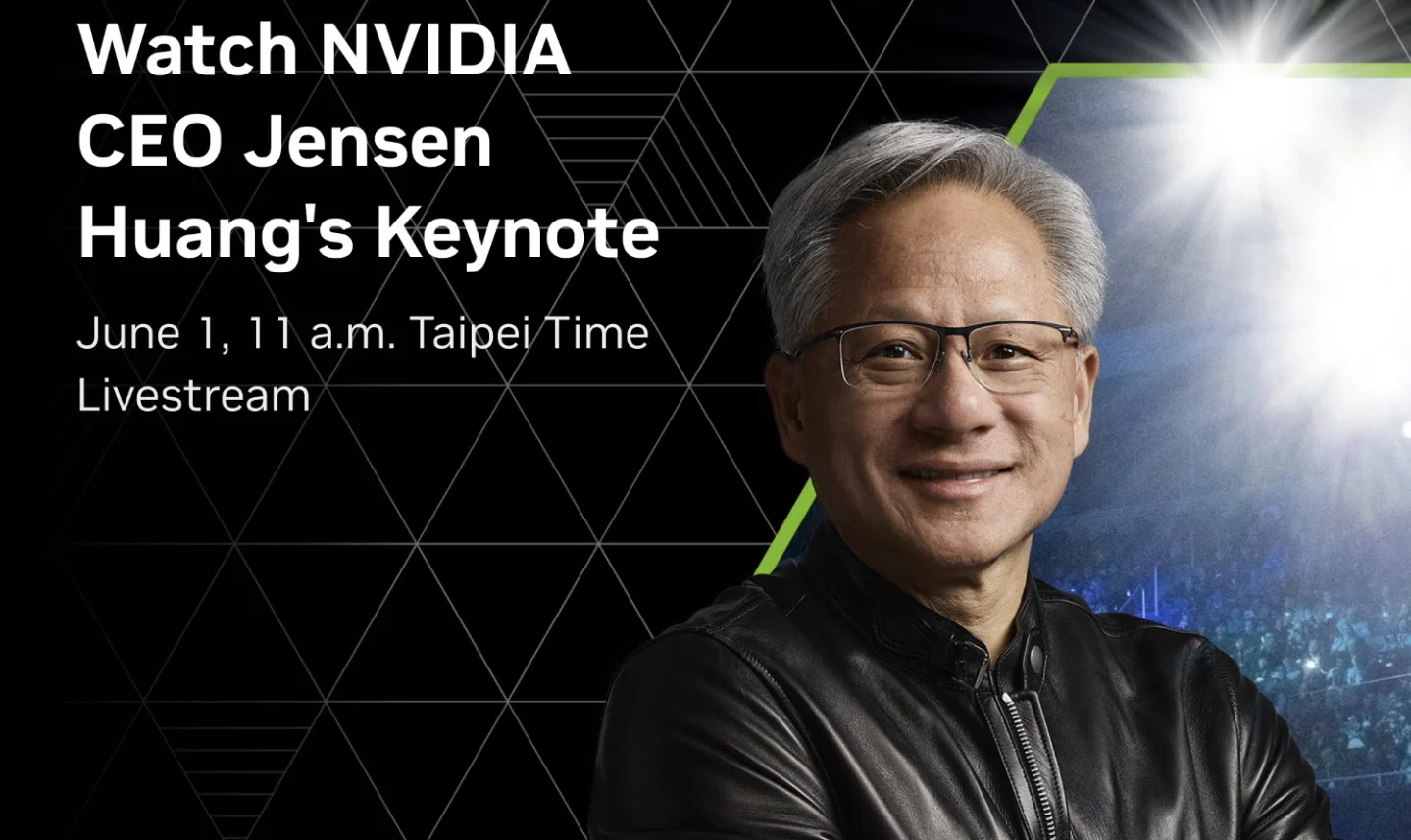
Cover image: Jensen Huang at NVIDIA GTC Taipei 2026 (NVIDIA / Wccftech)
参考来源
- 1Reuters: OpenAI's Altman says AI unlikely to lead to 'jobs apocalypse'
- 2TIME: Sam Altman Says AI 'Jobs Apocalypse' He Once Predicted Probably Won't Happen
- 3Fortune: Sam Altman and Dario Amodei are both walking back their AI jobs apocalypse prophecies as they eye blockbuster IPOs
- 4Sam Altman (@sama) on X: OpenAI Foundation tweet
- 5Sam Altman (@sama) on X: Rosalind Biodefense tweet
- 6OpenAI: Strengthening societal resilience with Rosalind Biodefense
- 7Sam Altman (@sama) on X: OpenAI Robotics tweet
- 8Anthropic: Introducing Claude Opus 4.8
- 9Fortune: Demis Hassabis on Isomorphic's new $2.1 billion
- 10Axios: DeepMind CEO: AI agents are a 'practice run' for AGI
- 11The Rundown AI: Exclusive: Demis Hassabis on AGI, curing diseases with AI
- 12WaveSpeed: Gemini 3.5 Pro and Flash: What Builders Should Know
- 13Wccftech: NVIDIA GTC Taipei 2026 Keynote
- 14TechTimes: Computex 2026: Jensen Huang Keynote, N1X Reveal
- 15The Verge: Nvidia, Microsoft, and Arm teasing new N1X laptop processors
- 16NVIDIA Blog: GTC Taipei at COMPUTEX Live Updates
- 17Business Insider / AOL: Nvidia's Jensen Huang says CEOs who blame AI for layoffs are giving a 'lazy' excuse
- 18VPEsports: NVIDIA CEO Huang: Who Will Lose Their Job to AI in 2026
- 19Korea Herald: 'Kkanbu summit' revives as Huang's Seoul agenda shifts to physical AI
- 20CNBC: Mistral to explore designing own chips, CEO Arthur Mensch says
- 21Reuters: Mistral defends military AI, expands data centres
- 22Semafor: Mustafa Suleyman's case against open-source AI shortcuts
- 23Fortune: Exclusive: Microsoft is building a Copilot super app
- 24Instagram: LeCun on Unsupervised Learning with Jacob Effron
- 25Anthropic: Chris Olah's remarks on Pope Leo XIV's encyclical
围绕这条内容继续补充观点或上下文。