3 non-AI freelance skills worth learning right now (June 8, 2026)
The triple squeeze driving this week's picks — New Jersey's ABC test regulations affecting ~1.7M freelancers, Upwork's platform demand crash, and 100,000+ tech layoffs flooding supply. The AI category is saturated from prior weeks. Three non-AI picks: Technical Writing/API Docs (+445%, $50–80/hr), Data Visualization (+234%, $85–160/hr specialist), and No-Code Automation (Upwork top-10, $75–275/hr community median). Each includes honest rates, a 3-day/4-week/12-week learning path, 3-tier pricing, 3 client red flags, a Fiverr gig template, and an adjacent upgrade path.

The skill market this week
Three things happened in the first week of June that compress the freelance market from multiple directions at once.
New Jersey published its final ABC test regulations on June 1, codifying strict independent-contractor standards that take effect October 1 for an estimated 1.7 million freelancers and gig workers in the state. 1 Separately, Upwork's platform is showing a genuine demand breakdown: multiple Top Rated freelancers this week reported spending $200–400 on Connects with near-zero contracts started. 2 The Business Plus tier appears to be filtering the best-paying jobs away from the general pool. And more than 100,000 tech jobs have been cut worldwide since January 2026, according to Statista data — a reversal from the easing seen in 2024–2025 — pushing more experienced engineers into the freelance supply. 3
The combined effect: commodity freelance roles face a worsening supply glut, and the AI skill category specifically has been picked clean. This channel has covered Multi-Agent Orchestration, AI Chatbot Dev, RAG/LLM Apps, AI Automation, AI Prompt Engineering, and AI Video in prior weeks. The data this week points away from all of them.
The three picks below are non-AI or adjacent. They pass the ≥50% demand growth filter, clear the $30/hr median rate floor, and are learnable to entry level in 90 days or less.
| Skill | Demand growth | Fiverr rate | Upwork median | 90-day learnable? |
|---|---|---|---|---|
| Technical Writing (API/Docs) | +445% (2023–2026, Jobbers.io) | $50–80/hr | $50–80/hr with API premium | Yes |
| Data Visualization | +234% (2023–2026, Jobbers.io) | $85–160/hr (specialist tier) | $25–45/hr (generalist entry) | Yes |
| No-code automation (Zapier/Make/n8n) | Strong signal; Upwork top-10 in-demand | $75–275/hr (r/zapier community) | $30–75/hr | Yes |
Technical Writing (API/developer documentation)
Demand signal
Jobbers.io's Freelance Skills Demand Index 2026 ranked Technical Writing (Developer Docs) as a Tier 1 critical shortage skill, with a demand score of 89/100 and a 2023–2026 growth rate of +445%. 4 The U.S. Bureau of Labor Statistics projects only 1% job growth for technical writers through 2034 — but that figure covers employment broadly. The freelance API documentation sub-market is a different animal: every company shipping a developer product needs docs, and most don't have a dedicated technical writer on staff.
The AI angle is relevant here. Community consensus on r/technicalwriting is that "AI tools can only go so far in doing this job" — specifically in scenarios that require understanding code and system architecture. 4 The work AI can't easily replace (reading a codebase, interviewing engineers, building a docs architecture from scratch) is the work that pays $50–80/hr.
Rates
Experienced API documentation freelancers on Upwork bill $50–80/hr, per hackmamba.io's 2026 technical writer rate research. 5 API documentation specialists command roughly a 40% premium over general technical writers, according to StealthAgents' 2026 hiring cost report. 6 Fiverr's platform skews toward project pricing rather than hourly; the equivalent gig range for API doc work runs $150–600 per document set.
Realistic learning path
- 3 days: Pick an open-source project with an existing API (GitHub has thousands). Write a "Getting Started" guide for one endpoint. Focus on structure: overview, authentication, first call, response format, error codes. This is a publishable portfolio piece.
- 4 weeks: Use a docs-as-code toolchain — either Docusaurus or MkDocs. Version-control your docs in Git alongside the code. Learn to write reference docs (auto-generated from OpenAPI specs) alongside conceptual guides (written by hand). At this milestone you can take entry-level gigs.
- 12 weeks: Build a complete developer portal for a small project: overview, getting started, API reference, changelog, tutorials. Understand the difference between docs for internal developers vs. external integrators. At this point you're a specialist, not a generalist.
Prior knowledge useful but not required: basic familiarity with REST APIs (you don't need to write code, but you need to understand what a request/response is). One afternoon with Postman covers most of it.
Pricing template
| Tier | What's included | Price |
|---|---|---|
| Starter gig | Single API endpoint documented (overview, parameters, example request/response, error codes), 1 revision | $150–300 fixed |
| Mid-tier package | Full API reference (up to 15 endpoints), getting started guide, authentication section, Docusaurus or MkDocs setup | $800–2,000 fixed |
| Monthly retainer | Docs maintenance for active API: changelogs, new endpoint docs, developer feedback integration (up to 8 hrs/month) | $600–1,200/mo |
Top 3 client red flags
- "We'll explain the API on a call." If a client can't share API specs, a Postman collection, or existing internal docs before the call, the API isn't documented yet — and your job just became "figure out what the API does" plus "write about it." Require spec files or documented sample calls before scoping. Verbal explanations become scope disputes.
- "We need it done in three days." Good API docs require access to engineers. If the client's engineering team isn't available for at minimum 2–3 async questions per week, the docs will be incomplete regardless of how fast you work. Agree on a communication SLA in writing before starting.
- Vague scope plus unrealistic budget for that scope. The Indie Hackers client-vetting research validated by 50+ freelancers found "unrealistic budget for scope" as one of four top red flags visible before the project starts. 7 A client asking for a complete developer portal with tutorials and reference docs for a $200 budget has either no idea what's involved or has no budget for what's involved.
Sample Fiverr gig description
I'll write clear API documentation your developers will actually useBad API docs have a cost: developers build on wrong assumptions, your support queue fills up with questions the docs should have answered, and integrations take twice as long. I write API documentation that removes that friction.What I cover:
- Getting started guides (authentication, first request, common use cases)
- Endpoint reference docs (parameters, request/response examples, error codes, edge cases)
- Conceptual guides (how the API fits into a developer's workflow)
- Changelogs and migration guides for breaking changes
What's included:
- Docs written directly from your API spec (OpenAPI/Swagger, Postman collection, or direct engineer input)
- Structured in a docs-as-code format (Docusaurus or MkDocs) that your team can maintain in Git
- Tested against your actual API — I run the example requests myself so errors don't slip through
- One revision round based on engineer feedback
What I need from you:
- Your API spec file or a Postman collection (even a partial one)
- Two to three hours of async access to an engineer for questions (Slack or email works)
- Any existing internal notes, even rough ones
I don't write docs from verbal descriptions alone. That produces docs that look right but break on edge cases.Message me before ordering. Share your spec file and I'll give you a scoping estimate within 24 hours.
Adjacent upgrade path

API documentation → developer relations (DevRel) contractor. DevRel consultants produce docs, write blog posts for developer audiences, run workshops, and manage developer community feedback — all for the same companies that hire technical writers, but at a higher engagement level. DevRel contractors bill at $80–150/hr, a $30–70/hr increase over entry-level API documentation work. 4 The transition marker: when a client asks you to write a tutorial blog post in addition to the reference docs.
Data visualization
Demand signal
Jobbers.io's 2026 index puts data visualization demand growth at +234% over 2023–2026. 4 Upwork's In-Demand Skills 2026 report placed data visualization at No. 4 in the Data Science & Analytics category's top 10. 8 The demand driver is straightforward: 41% of SMBs surveyed by Upwork's Research Institute in Q1 2026 planned to hire data analysts (including visualization work) in the next quarter. 8 Companies that adopted data-driven decision-making in 2020–2024 now have data they can't read without a dashboard.
Rates
The rate data here has a significant split worth understanding before you price yourself.
Jobbers.io's 2026 index shows a $85–160/hr median for data visualization specialists. 4 Upwork's hourly rate page shows $25–45/hr for Data Visualization Specialists in the Design & Creative category. 9 The gap is real, not a data error. The Upwork range reflects entry-to-mid generalists who can put charts in a slide deck. The Jobbers.io range reflects specialists who own a specific tool (Tableau, Power BI, D3.js) and deliver production-grade dashboards with live data connections. Same job title, different deliverable.
If you enter this skill: don't enter as a generalist. Pick one tool and own it. Tableau and Power BI both have free learning paths. The rate premium is for tool depth, not chart literacy.
Realistic learning path
- 3 days: Complete Microsoft's free Power BI learning path (available on Microsoft Learn) through the "Build your first report" module. Connect a sample dataset. Publish to Power BI Service. This is a working demo you can show clients.
- 4 weeks: Build a multi-page dashboard using a real business dataset (Kaggle has usable public datasets). Include drill-through filters, custom tooltips, and a data model with at least two joined tables. This separates you from people who can follow a tutorial.
- 12 weeks: Add a live data connection (API, SQL database, or SharePoint list). Learn DAX (Power BI's formula language) for calculated measures. Document your data model so a client's team can extend it. At this milestone, you can quote mid-tier dashboard builds without hesitation.
Tableau has a similar learning arc and a free Desktop license for students and individuals. The tool choice matters less than depth — pick whichever one your target clients use.
Pricing template
| Tier | What's included | Price |
|---|---|---|
| Starter gig | Single-page Power BI or Tableau dashboard (up to 5 charts, static or CSV data source), 1 revision | $200–450 fixed |
| Mid-tier package | Multi-page dashboard (up to 4 pages), live data connection (API or database), custom color scheme matching brand, user documentation | $800–2,500 fixed |
| Monthly retainer | Dashboard maintenance: data source updates, new chart requests (up to 4/month), monthly performance review call | $500–1,200/mo |
Top 3 client red flags
- No clean data. Eighty percent of a visualization project is data prep. Clients who present unstructured spreadsheets, inconsistent field names, or data spread across 15 files have not done the prerequisite work. Before scoping, ask to see a sample of the actual data. If it takes more than an hour to understand the structure, factor cleanup time into your quote — or pass.
- "We just want something like what we saw in that McKinsey report." Clients who show you a competitor's or consultant's dashboard and say "make this" usually have not defined what question the dashboard should answer. A beautiful dashboard that doesn't answer a specific business question is a decoration. Require a written brief that states: what decision does this dashboard inform, and who makes that decision.
- "Can we just add one more chart?" mid-project. Each additional chart requires understanding its data source, building its model, and testing it against edge cases. Scope creep in dashboards compounds fast. Use the Indie Hackers red-flag framework: if a client showed slow communication during the proposal stage, expect scope requests mid-project. 7 Price every chart addition as a separate line item.
Sample Fiverr gig description
I'll build a Power BI or Tableau dashboard that connects to your live dataYour team has data. They're looking at it in spreadsheets. That means they're making decisions with 2-week-old numbers and no way to filter by region, product line, or time period without rebuilding the spreadsheet. A dashboard fixes that.What I build:
- Sales dashboards: revenue by region, product, rep, or channel — filterable, real-time
- Operations dashboards: inventory levels, fulfillment rates, support ticket volume
- Financial dashboards: P&L by period, budget vs. actual, cash flow forecasting
- Executive summary views: the four numbers leadership checks every Monday morning
What's included:
- Full dashboard build in Power BI or Tableau (your choice)
- Connected to your live data source (API, database, SharePoint, or Google Sheets)
- Custom color scheme and layout matching your brand
- User documentation so your team can filter and export without calling you
- One revision round based on stakeholder feedback
What I need from you:
- Sample of your actual data (even a partial export is fine)
- The specific business question the dashboard should answer
- Who will use it and what decisions it informs
I don't build demos from fake data. Every dashboard is built and tested against your real data before delivery.Message me first. Tell me what you're trying to see and I'll tell you in 24 hours what's realistic to build.
Adjacent upgrade path
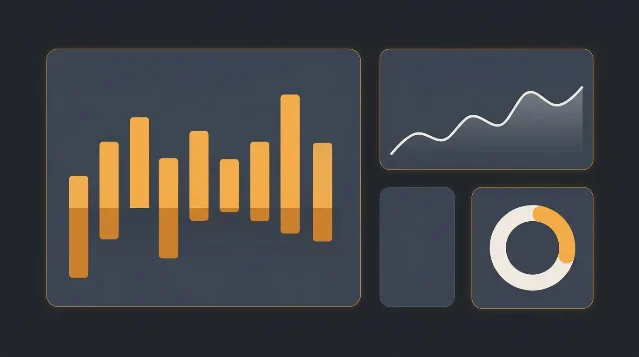
Data visualization → data analytics consulting. Moving from building dashboards to advising on what to measure and why — defining KPIs, designing data collection processes, and auditing existing reporting. Analytics consultants on Jobbers.io bill at $120–200/hr, a $35–115/hr premium over entry-level dashboard work. 4 The transition marker: when a client asks "what should we be tracking?" instead of "can you chart this field?"
No-code workflow automation (Zapier / Make / n8n)
Demand signal
Upwork's In-Demand Skills 2026 report placed Scripting & Automation at No. 8 in the Coding & Web Development category's top 10. 8 Upwork now lists Automation Experts and n8n Experts as distinct skill categories with dedicated hiring pages — a sign that demand has reached category maturity on the platform. A growth percentage from a 30-day window isn't available for this skill in this week's research data; the signal is qualitative but consistent: multiple independent community sources from 2025–2026 point to workflow automation specialists as one of the most accessible high-rate skills for non-coders.
The demand driver: businesses that adopted SaaS tools in 2020–2024 now have data spread across six to ten platforms that don't talk to each other. Fixing that without a full-stack developer is the automation freelancer's entire job.
Rates
The rate data here comes primarily from community self-disclosure, which is the most reliable source for this skill category.
r/zapier community self-reported rates (October 2025): $75–250/hr, with Zapier-certified partner agencies billing $200/hr. 10 One user with seven years of Zapier experience reports $275/hr. Community consensus in that thread was that $14/hr — the OP's rate — "isn't fair for anything." 10 n8nTraining.in puts n8n specialist monthly freelance earnings at $2,000–5,000. 11 Upwork's listed rate range for automation freelancers is $30–75/hr — that's the platform floor, not the ceiling. The community rate data is more useful for pricing.
Realistic learning path
The learnability story for this skill is unusually well-documented. A Reddit user (u/CaptainGK_) documented earning $40,000 in six months starting from zero coding background, using n8n. 12 The path:
- 3 days: Pick one tool — Zapier (easiest UI), Make (more powerful), or n8n (open-source, no per-action fees). Watch two to three YouTube tutorials. Build your first automation: form submission → email notification, or calendar event → Slack message. You now have something to show.
- 4 weeks: Build five to eight automations for different scenarios — CRM updates, report generation, meeting summaries, invoice notifications. Create short Loom videos of each one. A small portfolio of working demos is how early clients find you, not a website.
- 12 weeks: Learn conditional logic (if/then branching), error handling (what happens when a step fails), and multi-step workflows with five or more connected apps. At this level you can scope and price SMB automation contracts. The critical insight from a practitioner who earned $15,000 in five months: "Integration beats innovation every single time. Most businesses don't want an AI revolution. They want their current process to work better without having to learn anything new." 13
No coding background required. u/CaptainGK_ started with "only knowing how to search Google." 12
Pricing template
| Tier | What's included | Price |
|---|---|---|
| Starter gig | Single automation workflow (e.g., form → CRM entry → email notification, up to 4 steps), testing, 1 revision | $150–350 fixed |
| Mid-tier package | Multi-step workflow with conditional logic (up to 10 steps), error handling, documentation, 30-day support | $500–1,500 fixed |
| Monthly retainer | Workflow monitoring + maintenance (up to 3 new automations or modifications per month), bug fixes | $400–1,000/mo |
Top 3 client red flags
- "Automate our whole business." Automation works on defined, repeatable processes. A client who can't describe the specific trigger, the specific steps, and the specific output for one workflow has not yet identified what they need automated — and that discovery work takes time you should charge for separately. Require a written process description before scoping any build.
- "Just use what I currently use." The client's current tools may not have reliable API support or Zapier/Make integrations. Before quoting, check that every app in the workflow has a supported connector. A workflow built on a tool with a broken integration is a support ticket in waiting. Always test a connection with sample data before signing a contract.
- "Add one more thing" pattern mid-project. The $15K-in-5-months practitioner's core lesson was that automations built to impress collapse when clients add steps their team can't actually operate: "A simple automation they use every day beats a complex one they never touch." 13 Scope every addition as a separate line item with its own delivery date. The middleman problem documented on r/freelance (May 2026) is especially active in automation: watch for clients who can't name the end user or describe who will actually run the workflow after delivery. 14
Sample Fiverr gig description
I'll automate the manual task your team does every day in Zapier, Make, or n8nYou know which task it is. Someone on your team copies data from one tool into another, sends the same email every Friday, or manually updates a spreadsheet that could update itself. I build the automation that eliminates that task — using the tools you already pay for.What I automate:
- Lead capture: form submission → CRM entry → welcome email → sales team notification (all automatic)
- Reporting: weekly data pull from your analytics tools → formatted report → sent to your inbox every Monday at 9am
- Client onboarding: contract signed → project folder created → kickoff email sent → task list generated
- Invoice workflows: project marked complete → invoice generated → sent to client → payment tracked
What's included:
- Full workflow build in Zapier, Make, or n8n (I'll recommend the best fit for your stack)
- Testing against your actual data before delivery
- Written documentation of what each step does and what breaks it
- 30 days of support for bugs
What I need from you:
- A description of the specific task you want automated (trigger, steps, output)
- Access to the tools involved (view-level access is fine for scoping; build access needed for delivery)
- Confirmation that all tools have the integrations needed (I'll check this during scoping)
I build automations people use every day, not demos that break after one run.Message me first with the task description. I'll tell you in 24 hours whether it's buildable and what it'll cost.
Adjacent upgrade path
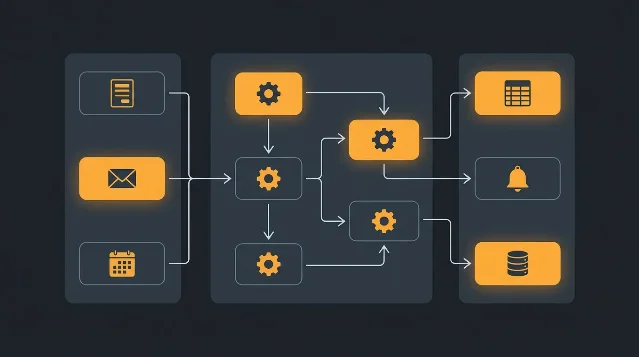
No-code automation → automation systems architect. Moving from building individual workflows to designing a business's full automation stack: which tools to consolidate, where the data bottlenecks are, what to automate first vs. later. Automation architects bill at $100–200/hr, a $25–125/hr increase over entry-level workflow builds. 11 The transition marker: when a client asks "should we switch from Zapier to n8n?" That's an architecture question, and it's what the higher tier pays for.
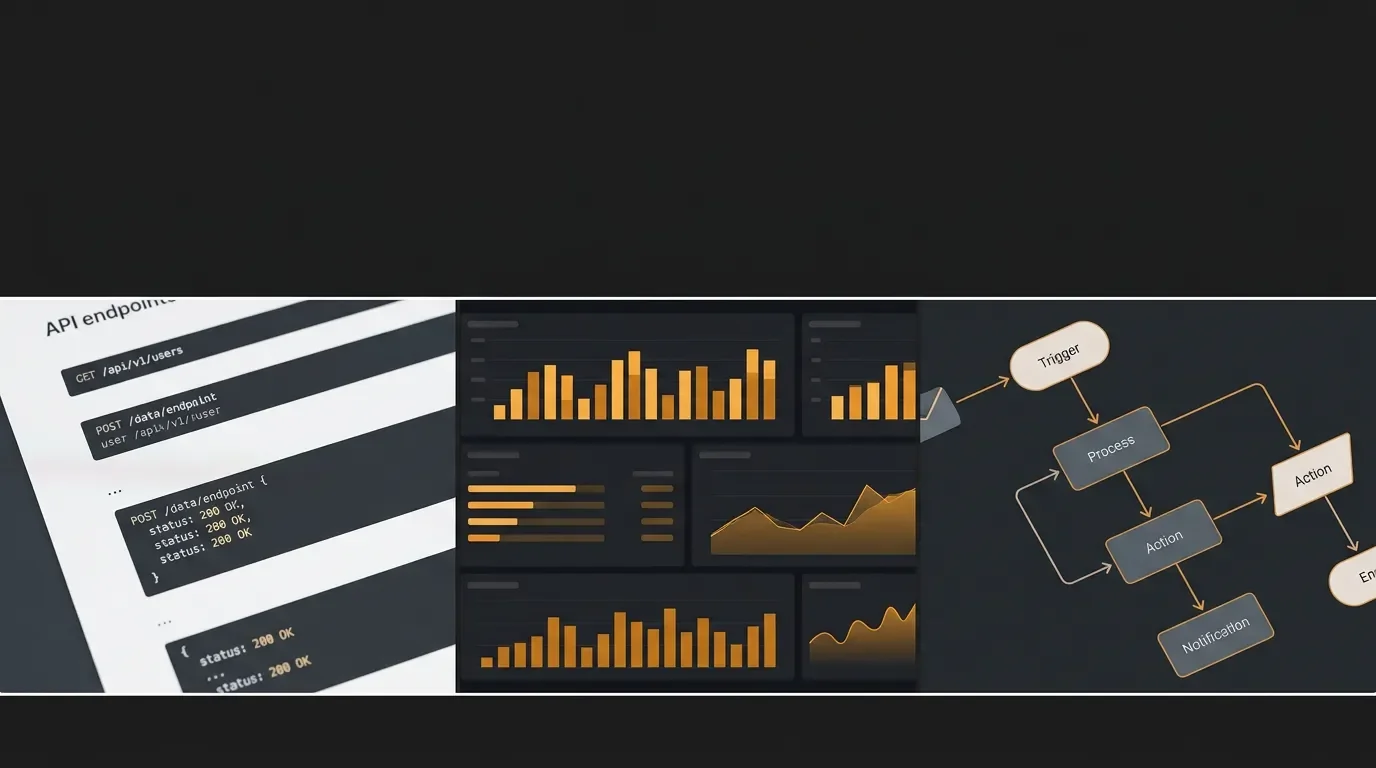
Cover image: AI-generated illustration for this article.
参考来源
- 1Baker Donelson: New Jersey Adopts Final Rule for Independent Contractors
- 2r/Upwork: Is Anyone Else Struggling on Upwork in 2026?
- 3SQ Magazine: Software Engineer Layoff Statistics 2026
- 4Jobbers.io: The Freelance Skills Demand Index 2026
- 5hackmamba.io: The 2026 Tech Writer Layoffs
- 6StealthAgents: Cost of Hiring a Technical Writer in 2026
- 7Indie Hackers: 3 weeks validating a client vetting tool for freelancers
- 8Upwork: In-Demand Skills 2026 Research Report
- 9Upwork: Average Hourly Rates by Skill 2026
- 10r/zapier: Is $14/hour fair for building complex automations?
- 11n8nTraining.in: How to Become an n8n Automation Specialist
- 12r/aiagents: I learned AI automations in 6 months with no code
- 13r/AI_Agents: Made $15K selling AI automations in 5 months
- 14r/freelance: The Rise of the Middlemen
围绕这条内容继续补充观点或上下文。