Pricing Moves & Feature Launches: Tech & Consumer Software (Week of May 28–June 1, 2026)
Six moves this week: GitHub Copilot flips to token billing on June 1 (some developers seeing 25x cost increases), Apple Music beta code hints at a free tier reversal, Microsoft bundles Copilot Health into M365 at no extra charge, Dell relaunches the XPS 13 at $599 (promo) to battle MacBook Neo, AMD brings the RX 9070 GRE to global markets at $549, and Vertu launches an AI-agent executive foldable starting at $6,880.

Pricing Moves & Feature Launches: Tech & Consumer Software (Week of May 28 – June 1, 2026)
Six moves this week, all anchored in the same underlying pressure: AI inference costs are forcing companies to reset the economics of tools they already sold, while the hardware market is scrambling to price against Apple's MacBook Neo in real time.
GitHub Copilot switches to token-based billing — effective today
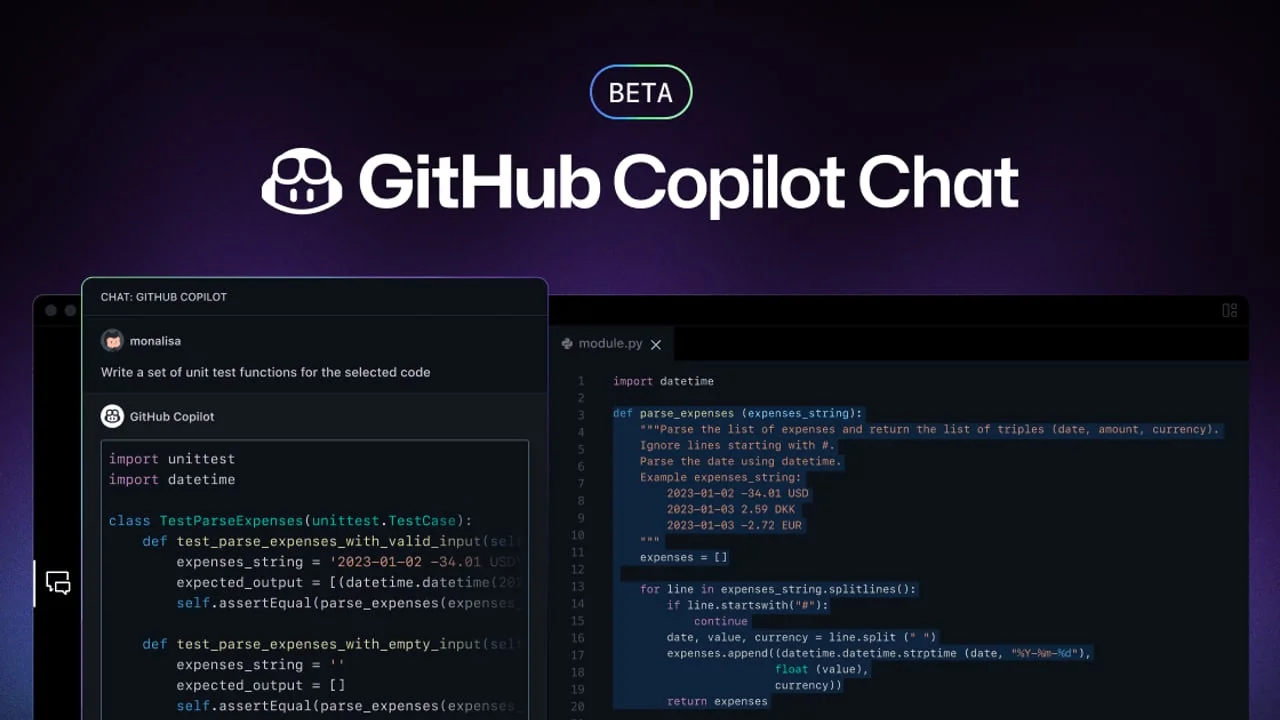
GitHub Copilot's flat subscription model ended June 1. Monthly subscribers are now billed based on tokens consumed across all AI interactions, replacing the old per-request model. The flat rates stay nominally unchanged — Copilot Pro at $10/month, Pro+ at $39/month, Business at $19/user/month, Enterprise at $39/user/month — but each plan now comes with a credit allotment equal to its dollar price, and overages are charged at published API rates. 1
The real cost exposure is in the tail. Heavy users on Reddit have shared screenshots showing monthly costs jumping from $29 to ~$750, or from $50 to ~$3,000, depending on how liberally they've been using agentic workflows. Code completion and Next Edit suggestions still don't consume credits — the blowouts are coming from multi-step agent sessions, background code review, and spawning sub-agents. 2
Business intent: Microsoft spent two years encouraging developers to use Copilot as an indiscriminate coding assistant — agents spinning for hours, multi-hundred-token requests at scale — then subsidized the cost through flat fees. With Copilot now positioned as an agentic platform rather than a tab-completion tool, the inference economics no longer work at $10/month regardless of usage. Token billing transfers that risk to the user. Enterprises with Microsoft's transitional promotional credits ($30/user for Business, $70/user for Enterprise through August) will feel the impact later; solo developers absorb it immediately.
Apple Music is testing a free (or cheaper) tier
Code strings found in a recent Apple Music Android beta include references to "Premium Access" and a "skip limit" — a structure that maps cleanly onto Spotify's ad-supported free tier or Amazon Music's Prime-level plan. Apple Music's head of music, Oliver Schusser, said in an April interview that he thought "free" was a bad idea, calling Apple Music the only major streaming service without an ad-supported option, and that Apple was proud of that distinction. 3 4
The current price is $10.99/month (single), and Apple retired its lowest tier — the Voice Plan — in 2023. This would be a reversal of a three-year positioning choice.
Business intent: Apple's growth in streaming has stalled where Android is dominant. A free or cheaper tier widens the top of the funnel — especially in markets where $10.99 is a meaningful barrier — and generates a conversion path that doesn't require owning Apple hardware. The "Premium Access" framing suggests a feature-gated model rather than ads, which preserves Apple's premium brand while lowering the barrier to entry. No launch date or pricing is confirmed; this is still a product signal from code, not an announcement.
Microsoft Copilot Health launches in preview for Microsoft 365 subscribers
Microsoft opened a preview of Copilot Health on May 29, available to Microsoft 365 Personal and Family subscribers in the US aged 18 and older. The feature connects to medical records, wearables, and health apps including Apple Health to generate personalized health insights and help find doctors. 5 6
Microsoft 365 Personal costs $6.99/month (or $69.99/year); Family is $9.99/month. Copilot Health is included at no additional cost during the preview.
Business intent: Microsoft's M365 subscription has been under pressure from Google Workspace at lower price points. Copilot Health is a stickiness play — it creates data relationships (medical records, wearable syncs) that are harder to migrate than documents or email. The health AI category is hot after OpenAI and Anthropic both announced health-adjacent products; Microsoft is using M365's existing install base to run at a market that neither competitor has bundled into a standard consumer subscription.
Dell relaunches the XPS 13 at $699, with a $599 student promotional price
Dell's XPS 13 is back, launching in July. The baseline configuration — Intel Core 5 "Wildcat Lake," 8GB RAM, 512GB storage, 13.4-inch 2560×1600 anti-glare touch display — starts at $699. A promotional student price of $599 runs through September, positioning it against Apple's MacBook Neo (which Dell notes is $100 more at the same student promo tier). 7
Higher-end XPS 13 configurations later this year will move to Intel Panther Lake chips with Thunderbolt 4 and up to 32GB RAM.
Business intent: The XPS line has drifted upmarket over the past two years while Qualcomm Snapdragon laptops have taken the under-$1,000 Windows slot. The July relaunch is a direct attempt to hold the MacBook Neo price bracket — not beat MacBook on specs, but match it on price optics during back-to-school season. The Panther Lake follow-on (without a set price) suggests Dell is also hedging toward the higher-end Computex ecosystem as those chips arrive in fall.

AMD launches RX 9070 GRE globally at $549 — formerly China-only
AMD's Radeon RX 9070 GRE, previously sold only in China, goes on sale globally on June 1 at $549. It sits below the RX 9070 (currently $599–$620 at stable supply) and below Nvidia's RTX 5070, offering a lower-cost entry into the current GPU generation. 8
AMD also relaunched two older CPU SKUs at Computex: the Ryzen 7 5800X3D 10th Anniversary Edition at $349 (for AM4 users wanting a final upgrade), and the Ryzen 7 7700X3D at $330 (a step-down from the 7800X3D for AM5 users). These are repriced or regionally reintroduced parts, not new architectures.
Business intent: The GRE's global release is AMD exploiting a specific Nvidia gap — the RTX 5070 has been scarce and expensive since launch. A $549 card at stable supply puts AMD in a position to capture buyers who've been waiting rather than paying a premium. The 10th Anniversary CPU and the 7700X3D are nostalgia and segmentation plays, extending AM4/AM5 platform value without cannibalizing AMD's newer Ryzen 9000 lineup.

Vertu's AI foldable targets executives at $6,880 to $46,800
Vertu launched the Alphafold, an AI-native foldable phone with an 8.05-inch internal display and a Snapdragon 8 Gen 4 processor, starting at $6,880 for calfskin leather and reaching $46,800 for the 18-karat gold and diamond variant. The device runs a proprietary AI agent called Hermes, built on the open-source Hermes project from Nous Research, which can connect to enterprise systems — ERP, CRM, approval workflows — via natural language. 9
A proprietary A5 security chip isolates biometric credentials and enterprise data from the main OS, and outbound prompts are de-identified before they reach external AI models. No third-party security audits have been completed yet; Vertu says it plans to publish results.
Business intent: Vertu's market is not productivity — it's signaling. The phone competes with nothing in the standard smartphone space; the price point is justified to buyers the same way a Patek Philippe is justified. But the AI agent layer adds an operational hook: if the Hermes integration genuinely automates executive workflows, the $46,800 version becomes expense-able rather than just personal luxury. That's a new monetization angle Vertu hasn't had before. The security architecture, if eventually audited, could also open doors in regulated industries (finance, legal, government) where standard cloud AI is blocked.
Pattern read
Two themes are running in parallel this week. The first is cost normalization for AI tools: GitHub Copilot's token billing is the most direct example, but Microsoft bundling health AI into $6.99/month M365 is the inverse — aggressive cost containment to lock users in before competitors charge separately. Apple's free-tier signal, if it materializes, follows the same logic: get more users inside the Apple ecosystem at a lower price rather than cede them to Spotify.
The second theme is the MacBook Neo price anchor. Dell's $599–$699 XPS 13 launch, AMD's $549 RX 9070 GRE, and the Computex wave of RTX Spark laptops are all being positioned against Apple hardware prices in public communications. Apple's MacBook Neo has effectively set the reference price for mid-range consumer hardware, and every PC-side launch this week is being evaluated in relation to that number.
参考来源
- 1GitHub Copilot is moving to usage-based billing
- 2GitHub Copilot token billing causes uproar among devs
- 3Apple Music could be adding a free or low-cost tier
- 4Apple Music subscription tiers spotted in Android beta
- 5Microsoft launches preview of Copilot Health
- 6Copilot Health: Now in Preview
- 7Dell XPS 13 relaunch pricing and specs
- 8AMD RX 9070 GRE, Ryzen launches at Computex
- 9Vertu Alphafold AI foldable pricing and features
围绕这条内容继续补充观点或上下文。